


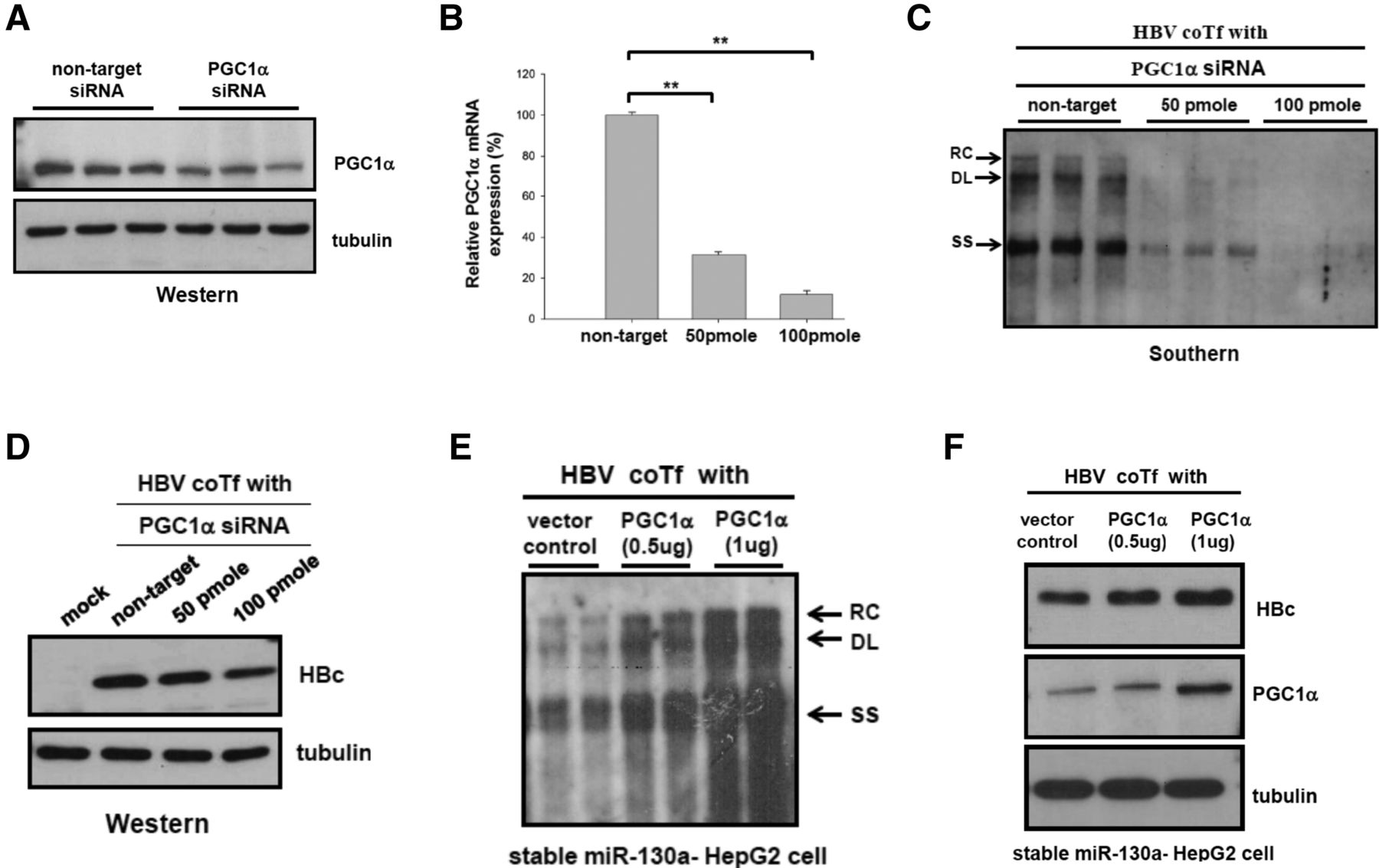
MiR-130a can attenuate HBV DNA replication and protein expression by targeting at a major metabolic regulator—PGC1α in hepatocytes. (A–D) HepG2 cells were cotransfected with HBV ayw dimer and siRNA-PGC1α or a nontarget control. Depletion of endogenous PGC1α by siRNA treatment resulted in repression of HBV DNA replication and protein expression. The efficiency of siRNA treatment for PGC1α was monitored by Western blotting (A) and real-time RT-qPCR (B). (C) Gradually decreased HBV DNA replication by Southern blot analysis was observed when siRNA concentration was increased. The result here is representative of at least three independent experiments. Reduced intracellular HBc protein was detected by Western blotting using an anti-core antibody (D). (E,F) A stable miR-130a expressing HepG2 cell line was cotransfected with HBV ayw dimer and increasing doses of a PGC1α expression vector. Gradual increases in viral replication by Southern blot analysis (E), as well as intracellular HBc protein by Western blot analysis (F), were observed. This PGC1α expression vector contains a 3′ UTR with no predicted target site for miR-130a, and is considered miR-130a-resistant (Materials and Methods). The dose–response relationship between PGC1α and viral replication was more apparent, when a derivative of HepG2 recipient cells, stably expressing miR-130a, was used (Materials and Methods).




