


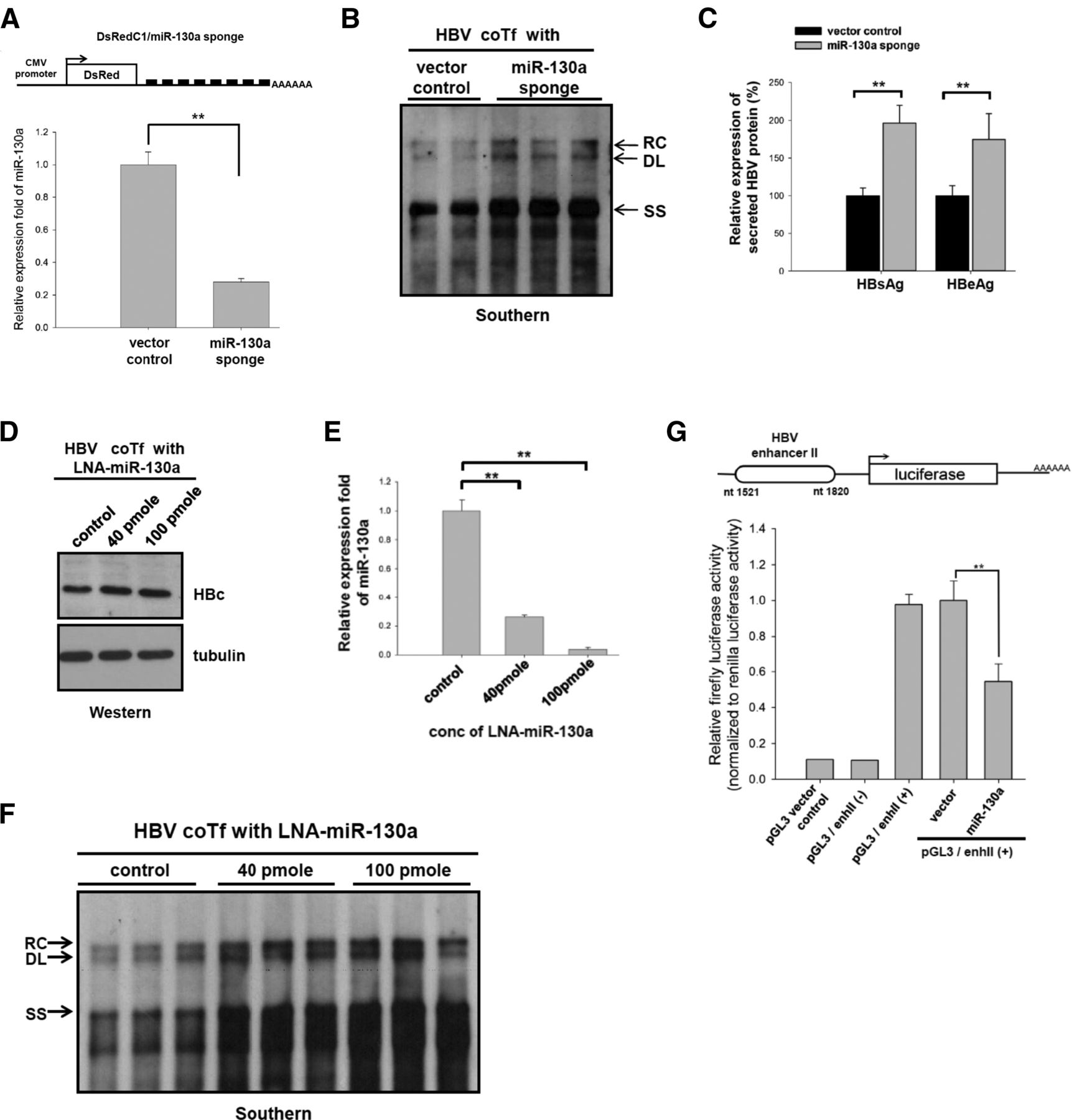
Reduction of endogenous miR-130a can enhance HBV DNA replication and protein expression. (A) (Upper panel) A cartoon of the miR-130a sponge plasmid. (Lower panel) The reduction of endogenous miR-130a by sponge treatment was measured by stem–loop qPCR. (B) HBV DNA replication was stimulated by the cotransfected miR-130a sponge by Southern blot analysis using an HBV specific probe. The result here is representative of at least three independent experiments. (C) Cotransfection of HBV ayw genomic dimer plasmid with miR-130a sponge enhanced levels of secreted HBsAg and HBeAg by ELISA. (D) Cotransfection of an HBV ayw genomic dimer plasmid with LNA-miR-130a antagomir increased the intracellular HBc protein level in a dose-dependent manner by Western blot assay. (E) The relative amounts of endogenous miR-130a sequestered at different doses of LNA-miR-130a were measured by stem–loop qPCR. (F) HBV DNA replication was enhanced by LNA-miR-130a treatment which can antagonize and reduce the endogenous miR-130a. HepG2 cells were cotransfected with HBV DNA and LNA-miR-130a or a scramble control at indicated concentrations. The result here is representative of at least three independent experiments. (G) MiR-130a can reduce the activity of HBV enhancer II in HuH-7 cells. HBV enhancer II-containing reporter (pGL3/enhII) was cotransfected with various miRNA expression vectors or vector control (Materials and Methods). pGL3/enhII (−) was a negative control carrying an HBV enhancer II in an anti-sense orientation. (**) P < 0.05.




