


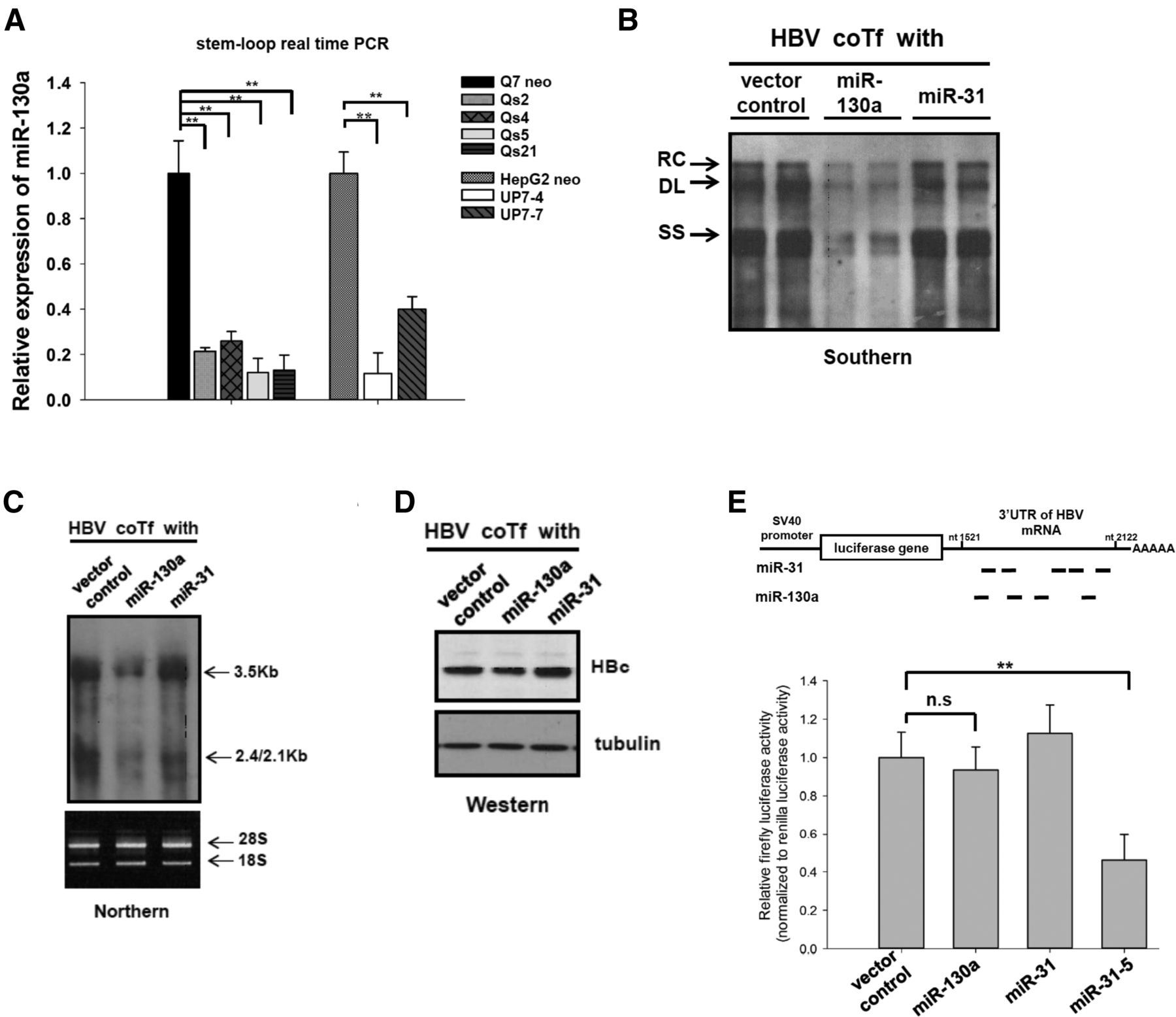
Human miR-130a can attenuate HBV replication and gene expression. (A) The expression level of miR-130a was always significantly reduced in stable HBV-producing cell lines. (B) Intracellular HBV replication using Southern blot assay in HepG2 cells were significantly reduced by cotransfection (coTf) of an HBV ayw genomic dimer plasmid and various miRNA expression vectors. The result here is representative of at least three independent experiments. The probe used here is a 2.8-kb HBV-specific DNA fragment containing HBV core gene. Empty vector control and miR-31 were included as negative controls. HBV replicative intermediates: (RC) relaxed circle, (DL) double-strand linear, (SS) single-strand viral DNA. (C) Reduction of HBV precore and pregenomic RNA (3.5 kb) and envelope-specific mRNA (2.4/2.1 kb) was detected by cotransfection with miR-130a expression vector and Northern blot analysis. (D) Reduction of intracellular HBV core protein (HBc) was detected by cotransfection with miR-130a via Western blot analysis. (E) (Upper panel) Potential microRNA target sites on HBV ayw genome were predicted by different computer algorithms. (Lower panel) HuH-7 cells were cotransfected with a luciferase reporter plasmid containing HBV nucleotides 1521–2122 and various miRNA expression vectors. MiR-31-5 was included as a positive control (Materials and Methods). (**) P < 0.05.




