


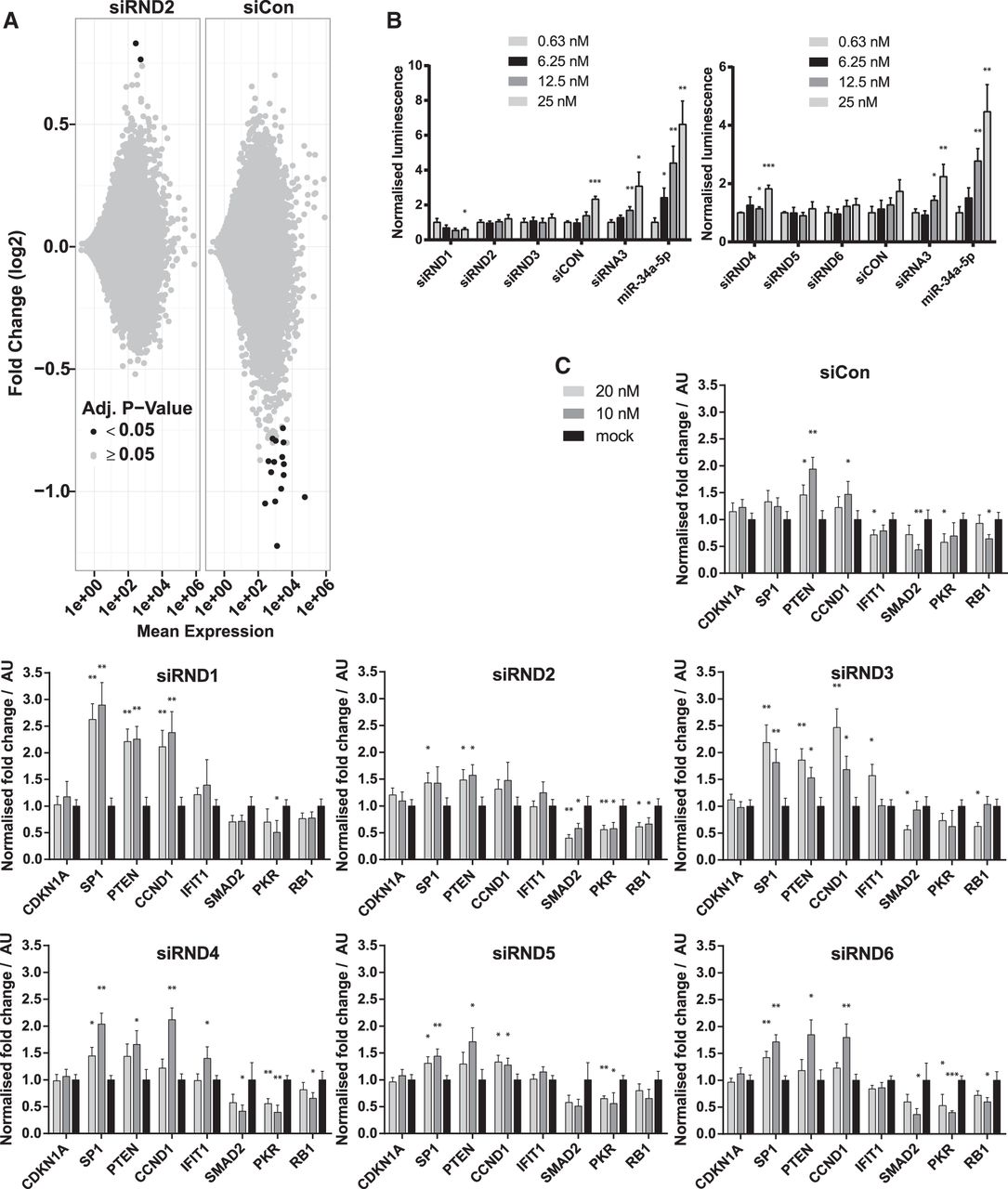
Sequence-independent effects of siRNDs. (A) MA plot comparing gene expression of cells from treatments with siRND2 and siCon versus a mock treatment. Differential expression analysis was performed using DESeq2. P-values for differential expression were adjusted for multiple testing using the Benjamini–Hochberg procedure and are shown in gray if <0.05. (B) Caspase 3/7 assays using supernatants of siRNA transfected HeLa cells. The figure shows caspase-3/7 activity 72 h post-transfection. Cells were transfected with siRNDs, siRNA3, or siCon. MicroRNA 34a-5p mimic served as a positive control. Data from averaged triplicates of one representative experiment are shown. Error bars represent ± SD. (C) SYBR green RT-qPCR analysis of rnd-siRNA transfections. SiRNDs and siCon were transfected into HeLa cells and the expression of select mRNAs involved in cell viability was measured. Cp values were normalized to GAPDH/ACTB and calibrated to the mock transfection. Bars represent the average normalized fold change of triplicate measurements ± SD from one representative experiment.




