


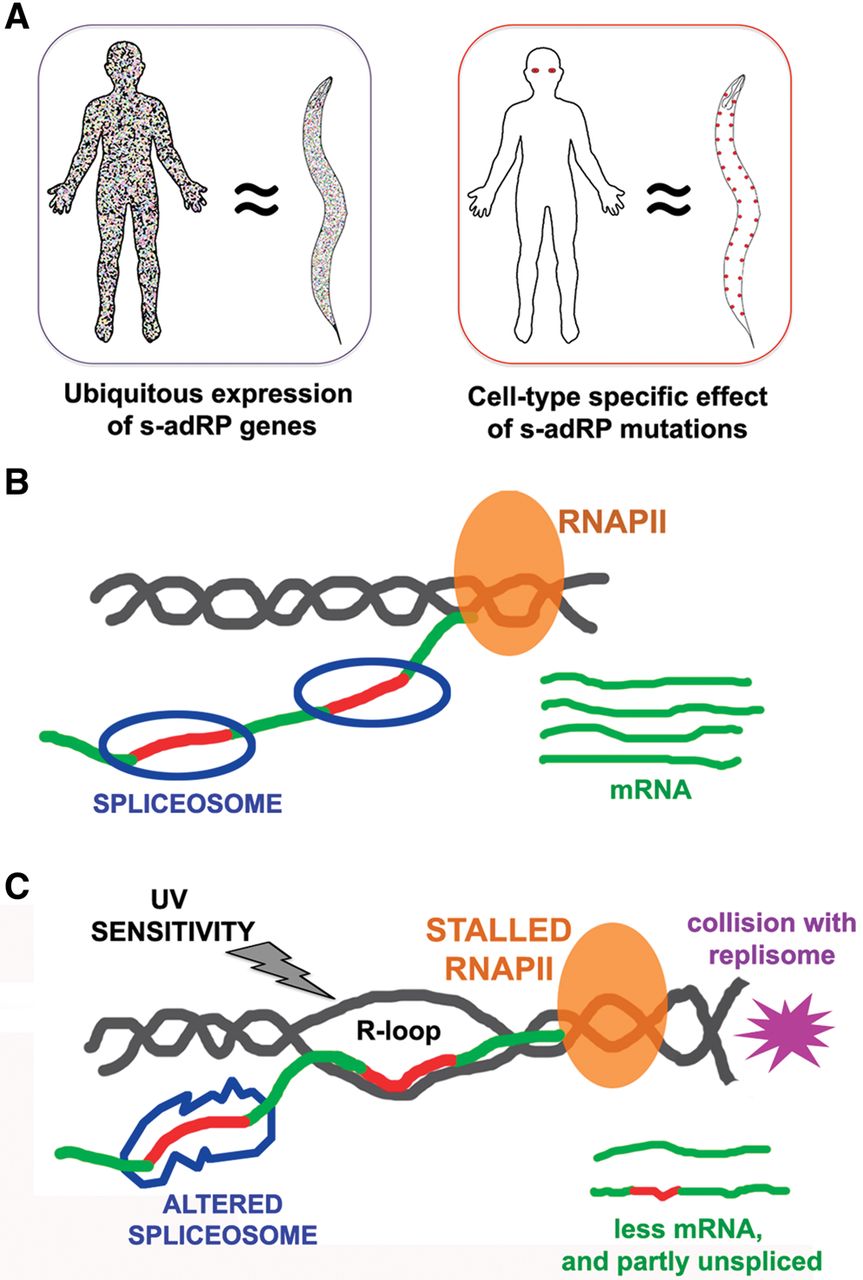
FIGURE 8.
Model for the tissue-specific apoptosis in s-adRP. (A) Similarly to humans, s-adRP genes are expressed in all C. elegans cell types. Partial inactivation of s-adRP genes causes tissue-specific defects both in humans and worms. (B) In normal condition, splicing occurs cotranscriptionally. (C) When the functioning of the splicesome is altered, the activity of the RNAPII is affected and R-loops (DNA–RNA hybrids) are produced, creating single-strand DNA regions that are more sensitive to DNA insults. Moreover, R-loops may cause collisions between the transcriptional and the replicative machineries.




