


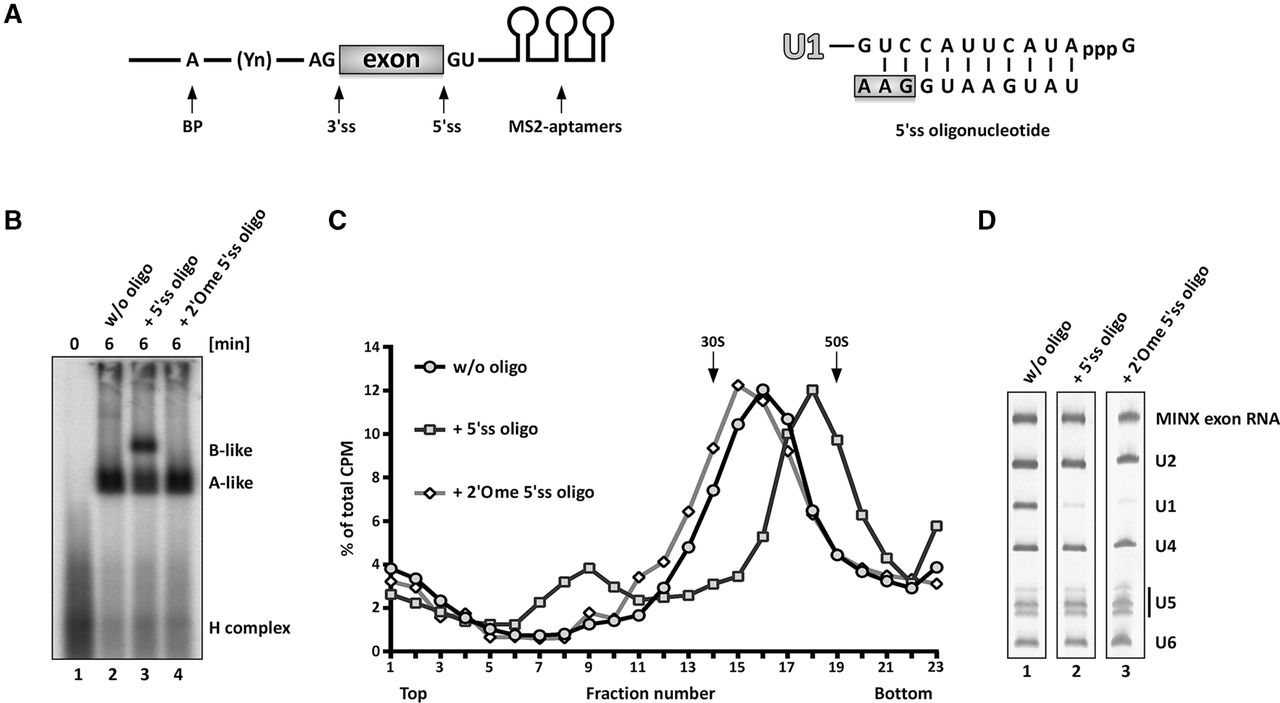
Displacement of U1 is not sufficient to induce 45S B-like complex formation. (A) Schematic representation of the MINX exon RNA (left) and sequence of the optimized 5′ss oligonucleotide (right). Exonic nucleotides are highlighted with a box, the branch point (BP) adenosine is indicated by an A, and the polypyrimidine tract by Yn. (B,C) Cross-exon splicing complexes assembled on 32P-labeled MINX exon RNA in nuclear extract ± the 5′ss oligo or a 2′O-ribose methylated (2′Ome) version, as indicated, and analyzed on a native agarose gel in the presence of heparin (B) or on a 10%–30% glycerol gradient containing 150 mM KCl. (C) The positions of A- and B-like complexes as well as the H complex are indicated. The percentage of total radioactivity in each gradient fraction is plotted. Sedimentation values were determined using prokaryotic ribosomal subunits run in parallel. (D) Complexes in peak gradient fractions 15–18 (without, w/o oligo), 17–20 (+5′ss oligo), or 14–17 (+2′Ome 5′ss oligo) were affinity-purified, and their RNA was analyzed by denaturing PAGE and visualized by silver staining. RNA identities are indicated on the right.




