


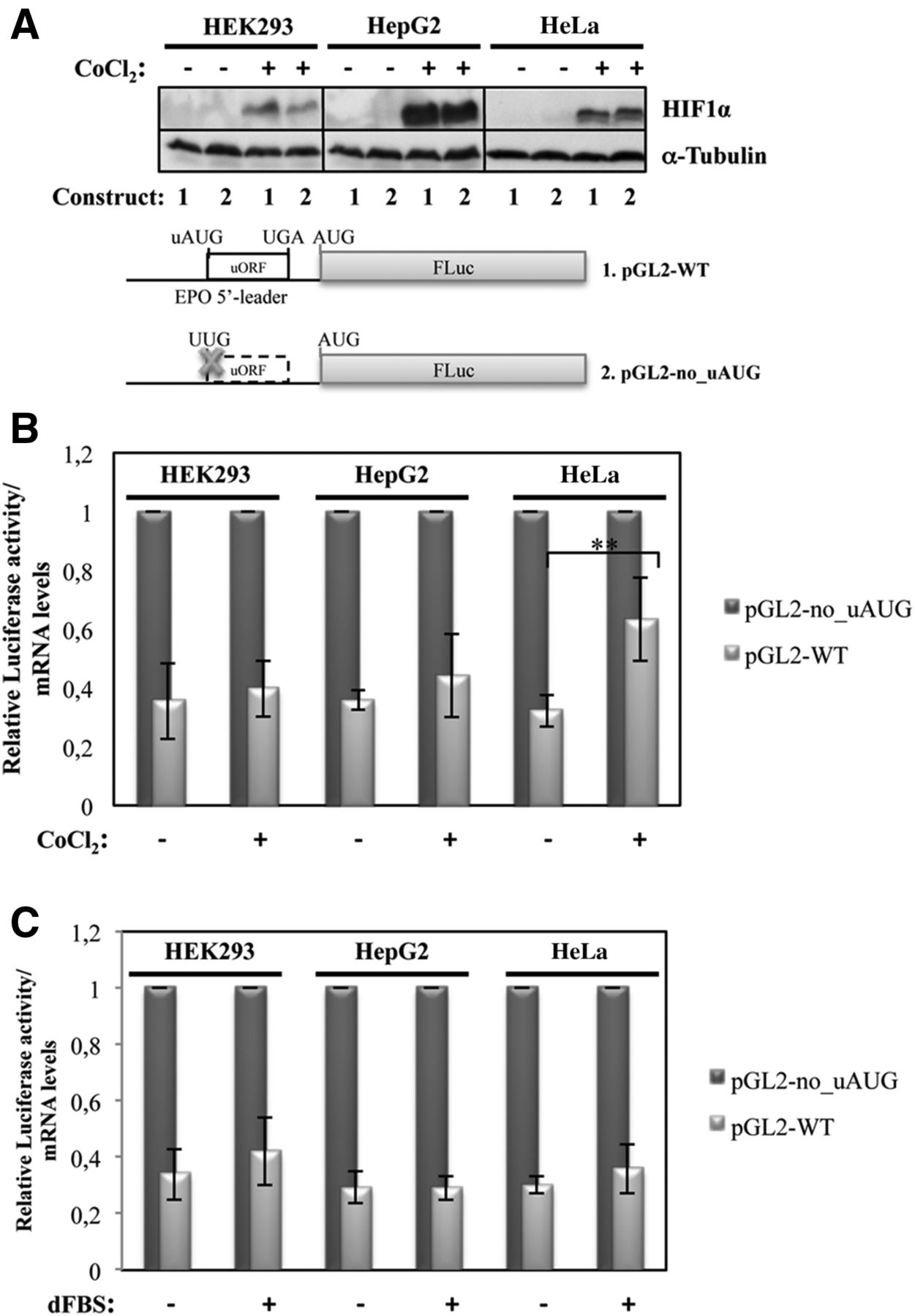
The EPO uORF responds to hypoxia but not to nutrient starvation, specifically in HeLa cells. The pGL-WT (construct 1) and pGL2-no_uAUG (construct 2) vectors represented as in Figure 2 were separately cotransfected with a plasmid encoding RLuc (pRL-TK) in HEK293, HepG2, and HeLa cells. Six hours after transfection, cells were untreated (−) or treated (+) for 24 h with 200 µM CoCl2 to mimic hypoxic conditions or with medium supplemented with 10% (v/v) dialyzed fetal bovine serum (dFBS) to induce nutrient starvation. (A) Representative Western blot analysis of HEK293, HepG2, and HeLa cell extracts untreated (−) or treated (+) with CoCl2 as indicated. Immunoblotting was performed using a human HIF1α–specific antibody to control the stress conditions and a human α-tubulin–specific antibody to control for variations in protein loading. (B) Normoxic (CoCl2 −) and hypoxic (CoCl2 +) transfected cells were lysed and analyzed as described in the legend to Figure 2B. (C) Cells cultured in nutrient deprivation (dFBS +) or in control conditions (dFBS −) were lysed and analyzed as described in the legend to Figure 2B.




