


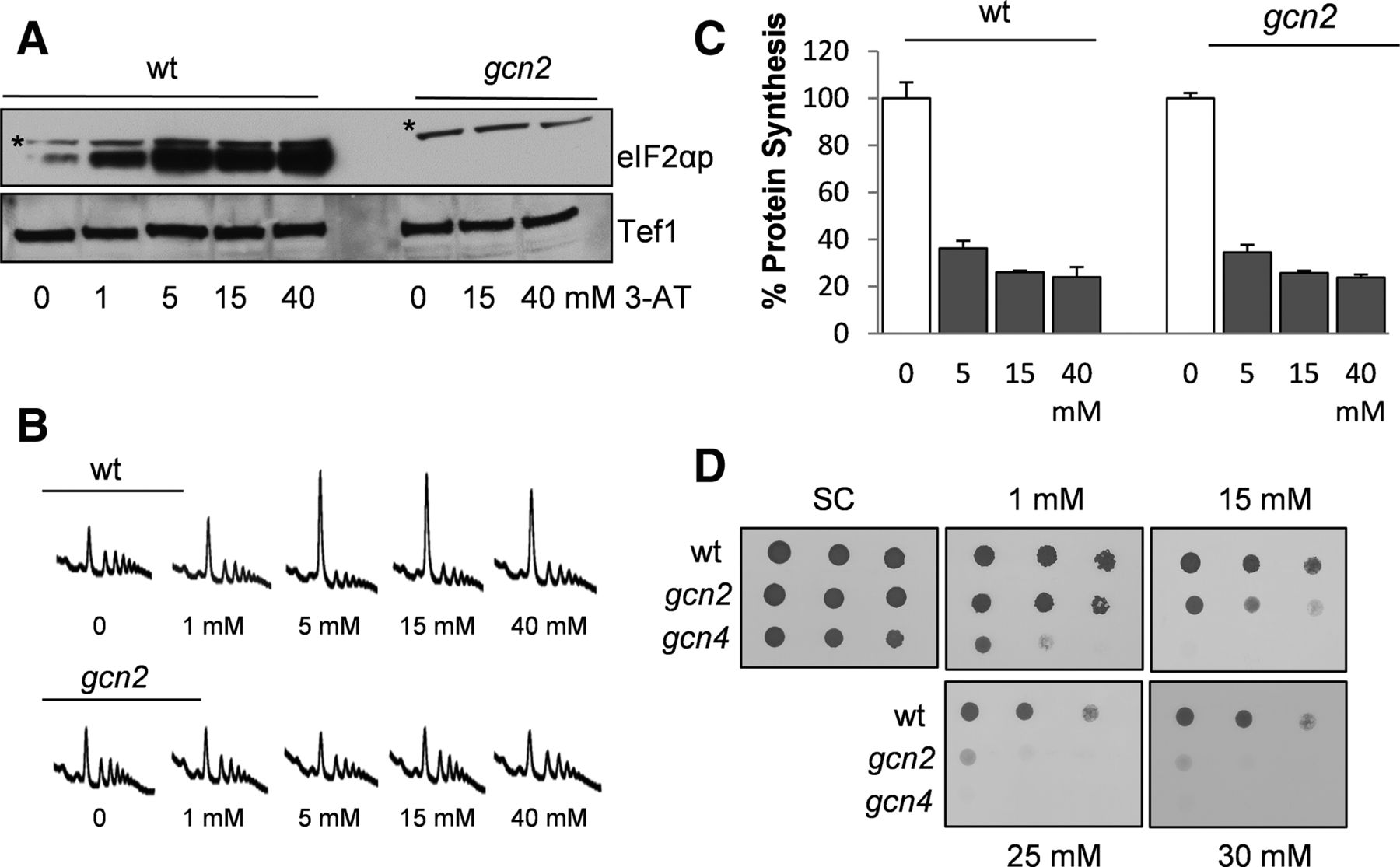
Regulation of C. albicans translation initiation by Gcn2. (A) The wild-type and gcn2 mutant strains were treated with the indicated concentrations of 3AT for 1 h. Immunoblots are shown probed with antibodies specific for phosphorylated eIF2α and translation elongation factor 1 (Tef1) as a loading control. (*) A nonspecific band recognized by anti-eIF2αP. (B) Polyribosome traces are shown for strains treated with the indicated concentrations of 3AT for 1 h. Peaks correspond to small ribosomal subunits (40S), large ribosomal subunits (60S), monosomes (80S), and increasing numbers of ribosomes bound to mRNAs (polysomes). (C) Protein synthesis was measured by pulse labeling with [35S]-cysteine/methionine for 5 min. Data are shown for untreated cultures (100%) and following treatments with different concentrations of 3AT. (D) Strains were grown to stationary phase and diluted cultures (A600 = 1.0, 0.1, and 0.01) spotted onto SCD agar plates containing the indicated concentrations of 3AT.




