


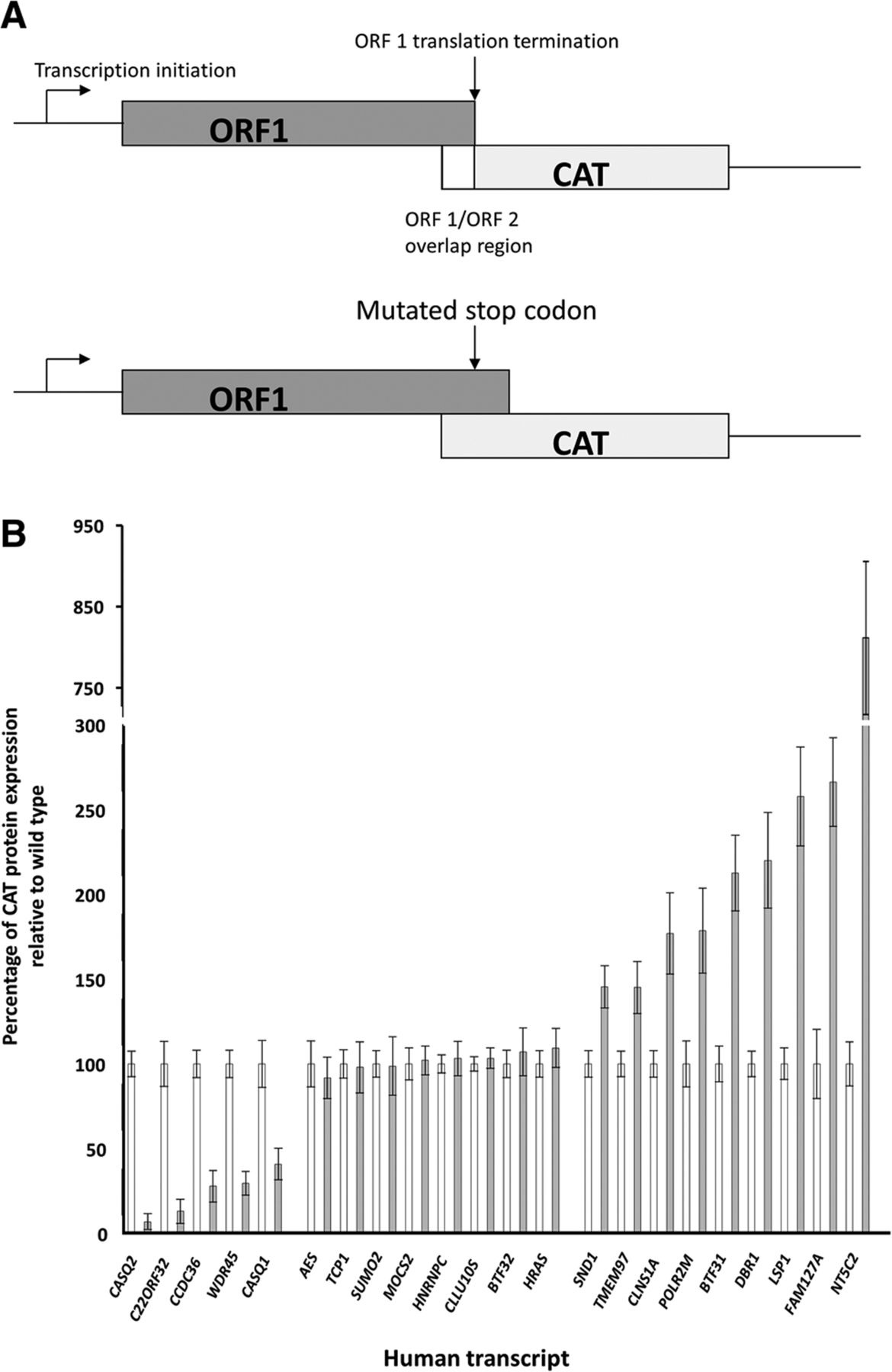
(A) Diagrammatic representation of the reporter gene construct used in the ORF-2 expression assays (not to scale). The ORF-2 coding region was replaced with the coding region of the chloramphenicol acetyl transferase (CAT gene). The ORF-1 sequence was unaltered. In the STOP mutants the termination codon of ORF-1 was mutated moving termination of ORF-1 downstream 36 nt. (B) Expression of the CAT protein from ORF-2 in constructs derived from the mRNA transcripts identified and listed in Supplemental Table 1. The expression from the wild-type gene construct is shown in the white columns and expression from the associated STOP mutant in which the ORF-1 translation termination codon was mutated are shown in the gray columns. The expression is given as a percentage of that seen with the nonmutated wild-type construct which was set as 100%. Error bars indicate the standard deviation of at least three independent experiments, with each performed in triplicate within an experiment.




