


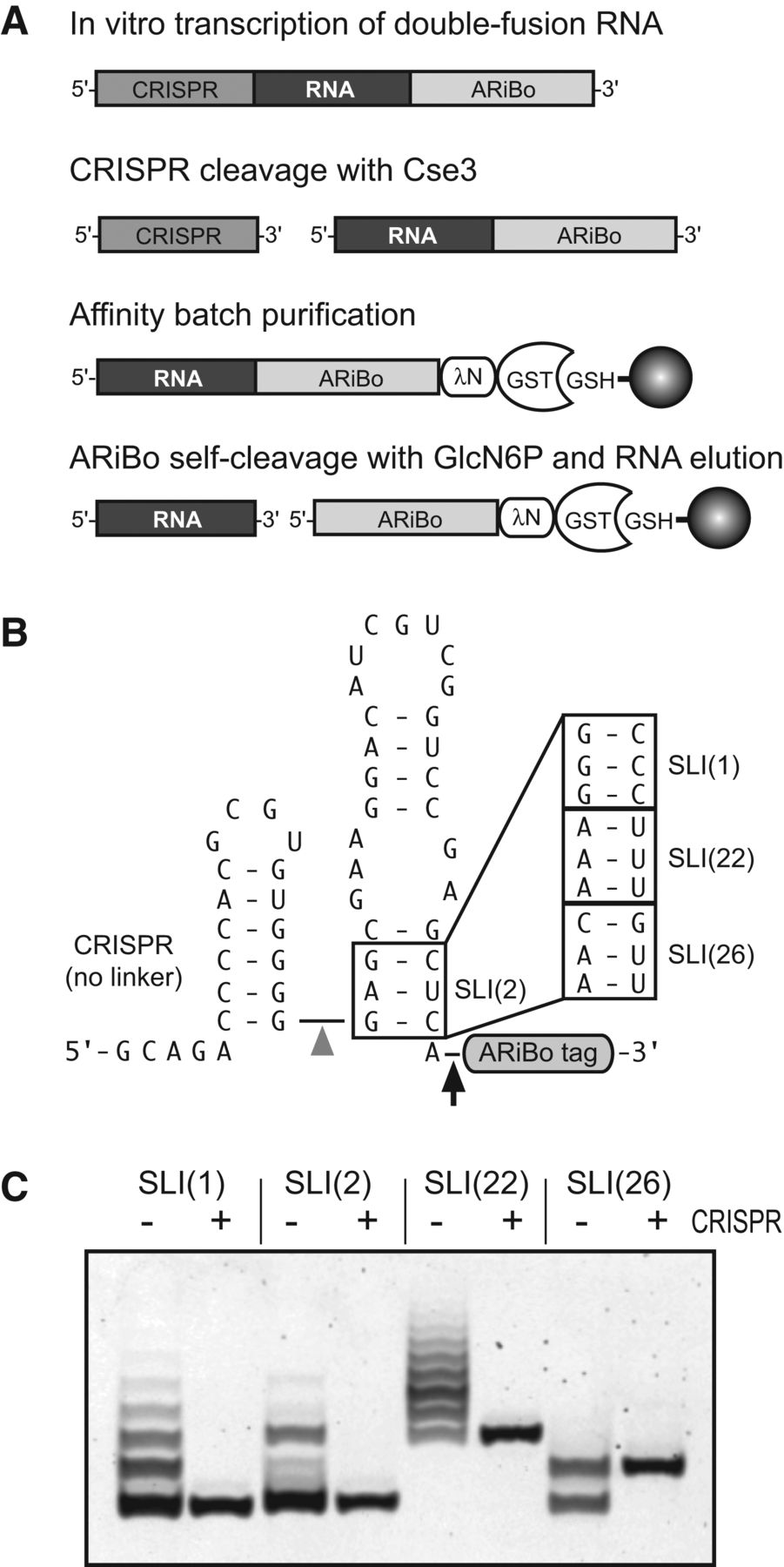
Affinity purification of RNA with homogeneous ends using CRISPR and ARiBo tags. (A) General strategy for affinity batch purification of RNA from a CRISPR–RNA-ARiBo precursor, a double-fusion RNA with a 5′-CRISPR tag and a 3′-ARiBo tag. After transcription, Cse3 cleavage of the CRISPR tag yields the ARiBo-fusion RNA, which is bound to a λN-GST fusion protein and immobilized on GSH-Sepharose beads. After several washes, RNA elution is triggered by addition of GlcN6P, which activates the glmS ribozyme of the ARiBo tag. (B) Schematic representation of CRISPR–SLI-ARiBo double-fusion RNAs with an AUG deletion (no linker) just 3′ from the Cse3 cleavage site. (C) Small-scale affinity batch purifications of SLI RNAs from SLI-ARiBo (− lanes) and CRISPR–SLI-ARiBo (+ lanes) precursors analyzed on a 20% denaturing polyacrylamide gel stained with SYBR Gold. For purification of SLI-ARiBo precursors, the E1 elution fractions were treated with calf alkaline phosphatase prior to loading on the gel; they correspond to samples shown in Figures 2D and 3C. For CRISPR–SLI-ARiBo precursors, CRISPR cleavage was performed for 15 min at 70°C using an RNA:Cse3 ratio of 1:2 [SLI(2)] or for 30 min at 70°C using an RNA:Cse3 ratio of 1:4 [SLI(1), SLI(22), and SLI(26)]. Aliquots of the E1 elution fractions were loaded on the gel.




