


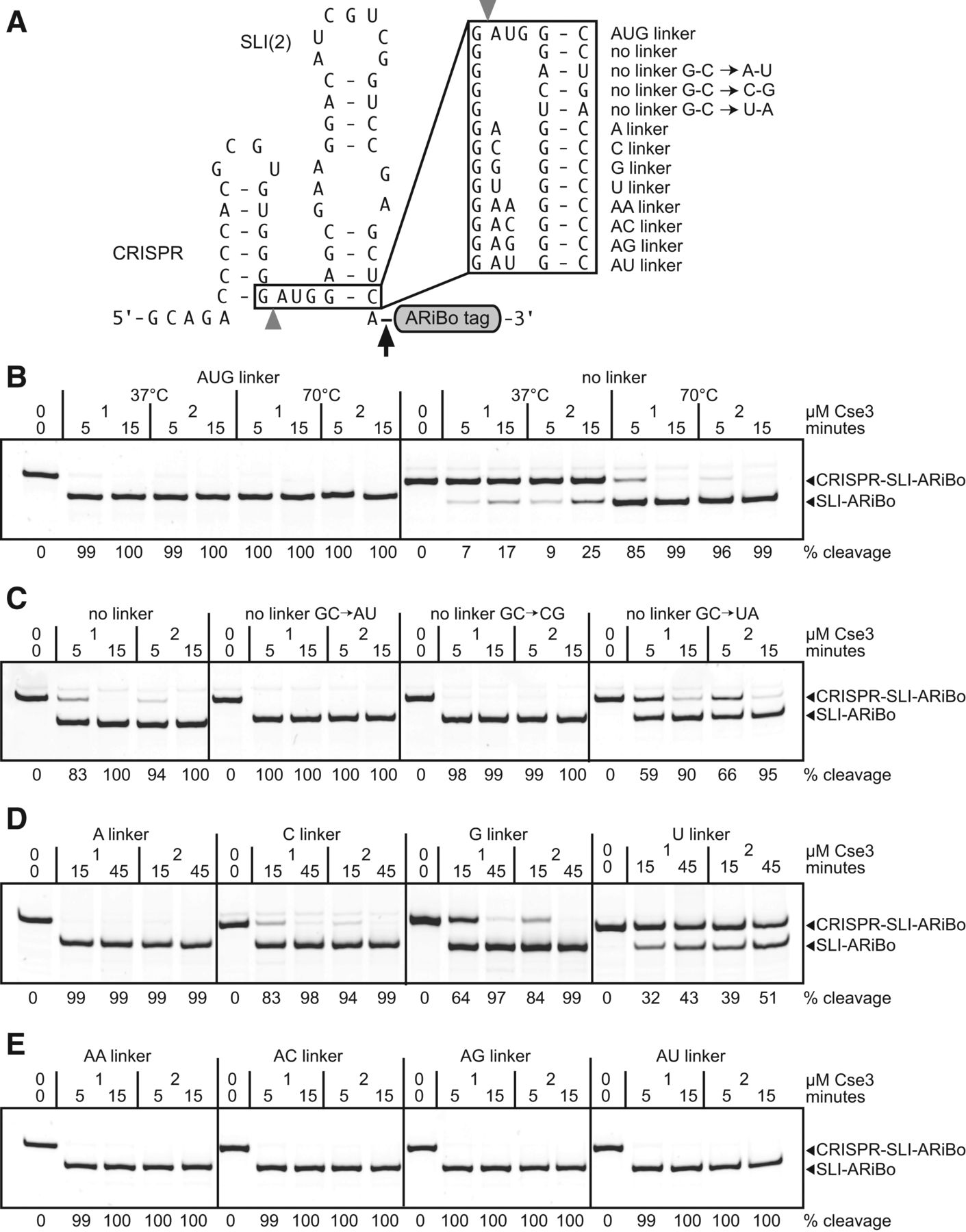
Effect of CRISPR–RNA junction sequence on Cse3 cleavage. (A) Schematic representation of CRISPR–SLI(2)-ARiBo double-fusion RNAs with the original CRISPR sequence (AUG linker) or related variants with sequence changes at the CRISPR–RNA junction (boxed area). (Gray arrowhead) Points to the Cse3 cleavage site; (black arrow) points to the glmS cleavage site. (B–E) Cse3 cleavage of CRISPR–SLI-ARiBo RNAs analyzed on 10% denaturing polyacrylamide gels stained with SYBR Gold. Cse3 cleavage was performed using aliquots from the transcription reactions (∼1 μM RNA), 20 mM HEPES (pH 7.5), 150 mM KCl, either 1 or 2 μM Cse3, and different incubation times, as indicated above each lane. For experiments reported in B, Cse3 cleavage was performed at either 37°C or 70°C, as indicated, whereas for those reported in C–E, Cse3 cleavage was performed at 70°C. The gel mobilities of the RNA precursor (CRISPR–SLI-ARiBo) and the Cse3 cleavage product (SLI-ARiBo) are indicated with arrows on the right side of the gels. The percentages of Cse3 cleavage are given below the gels.




