


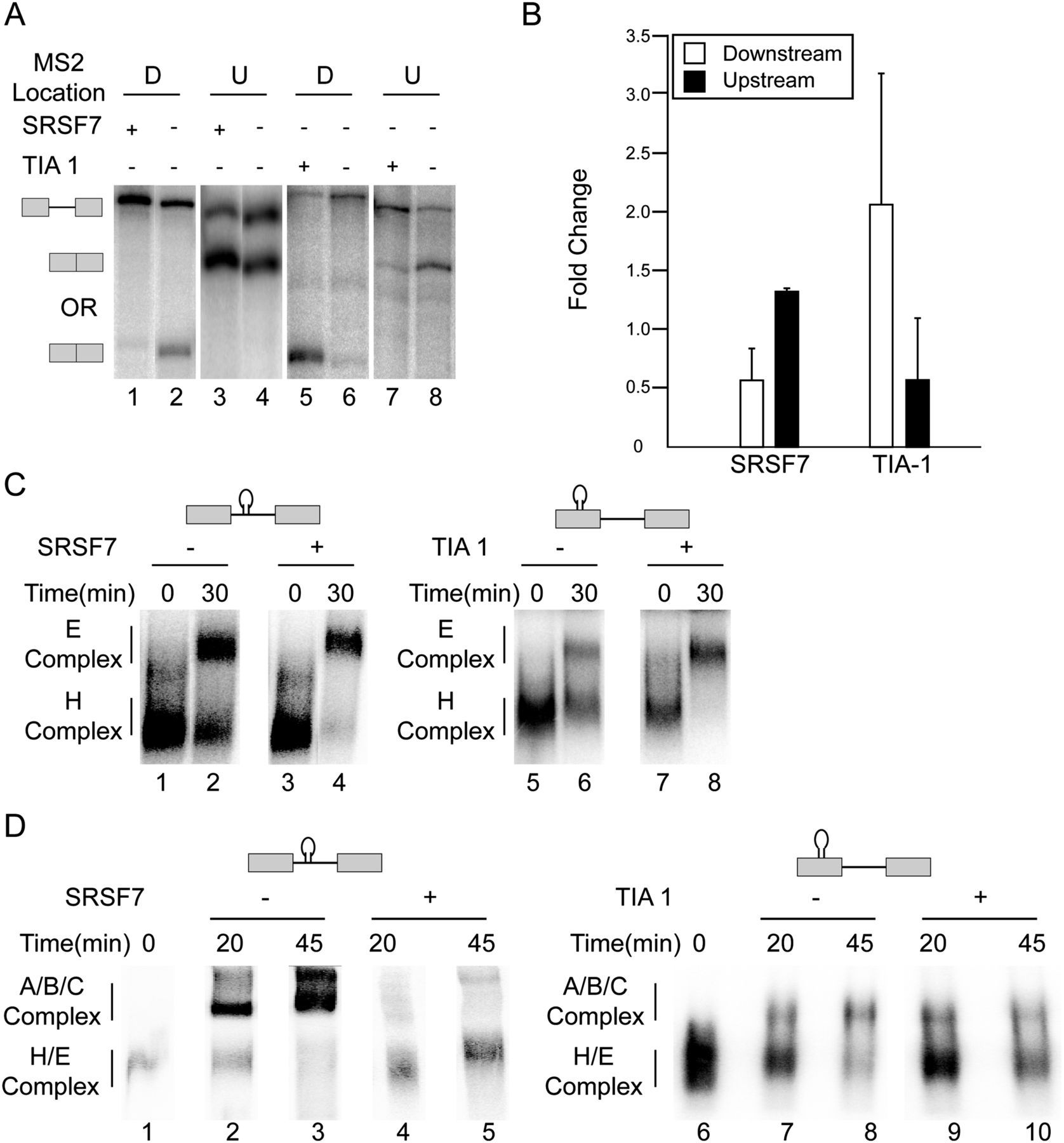
Binding of SRSF7 to the intron does not interfere with E-complex formation. (A) In vitro splicing reaction time course in the presence or absence of MS2-RS-SRSF7 or MS2-TIA-1 binding either upstream of or downstream from the 5′ss. (B) In vitro splicing reactions were repeated and quantified. (C) ATP-independent E-complex formation in the presence or absence of MS2-RS-SRSF7 or MS2-TIA-1 was visualized using agarose gel electrophoresis. (D) Higher-order, ATP-dependent complex formation in the presence or absence of MS2-RS-SRSF7 or MS2-TIA-1 was visualized using polyacrylamide native gels or agarose gels. Spliceosomal complexes or splicing products formed during the reactions are defined next to each gel.




