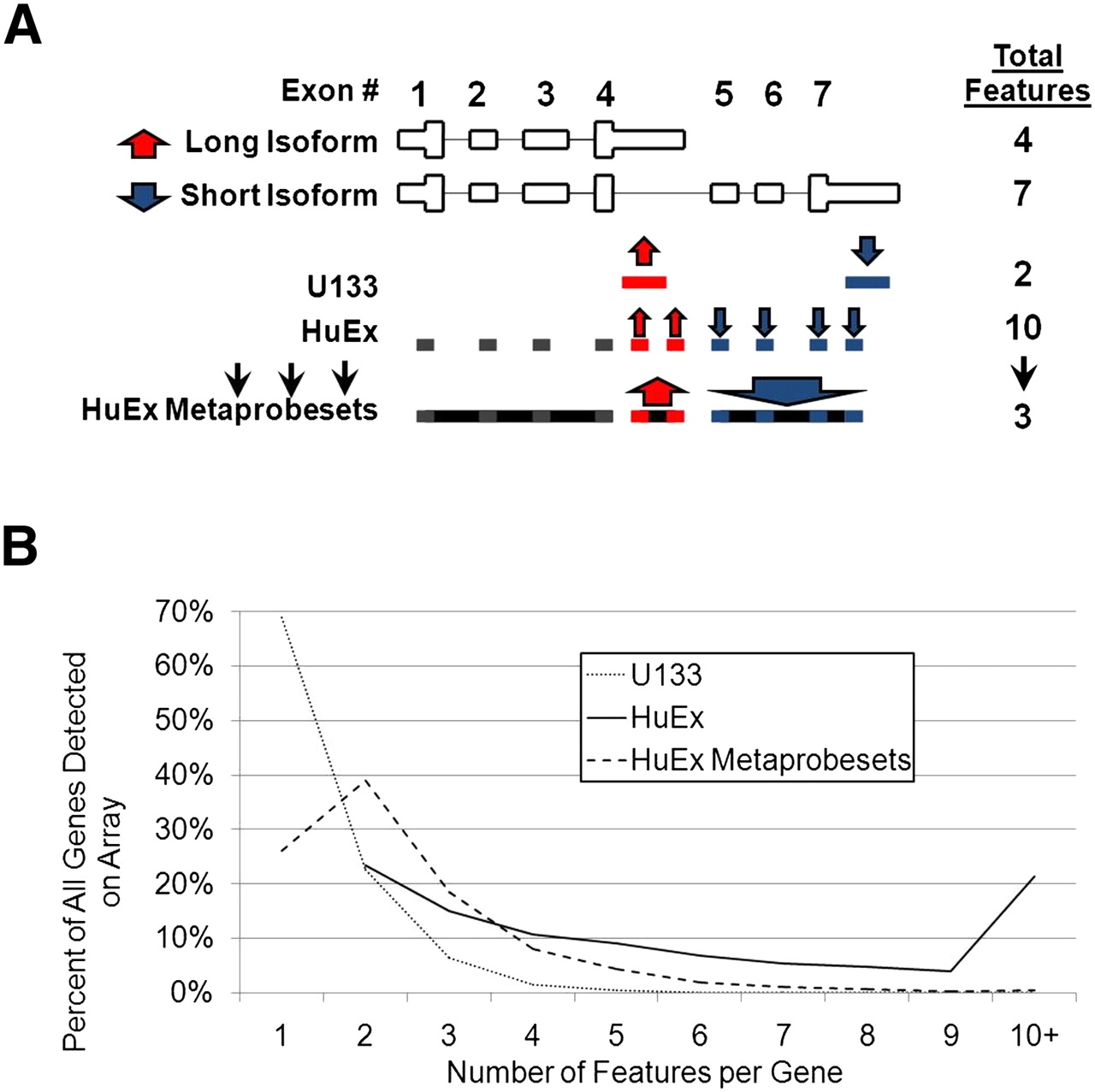
SplicerEX application of meta-probe sets to human exon (HuEx) arrays. (A) Diagram comparing interrogation by 3′ IVT (i.e., U133) versus HuEx microarrays of a hypothetical gene undergoing alternative 3′-terminal exon choice. U133 arrays possess fewer probe sets per gene than the HuEx array and preferentially target 3′ UTRs of known mRNA transcripts. Collapsing exon array probe sets into meta-probe sets on the basis of correlated expression patterns reduces the number of features per gene to a level similar to 3′-IVT arrays. SplicerEX then identifies the two most divergently expressed features within a gene (red and blue) to locate and characterize structural changes in mRNA isoforms. (B) Number of features per gene for the conventional U133, HuEx (Exon Array), and HuEx meta-probe set–preprocessed microarray data. Collapsing exon array features on the basis of correlated expression patterns reduces the number of exon array features per gene to a level similar to that of the U133 array, permitting analysis of both array platforms by a single algorithm.