


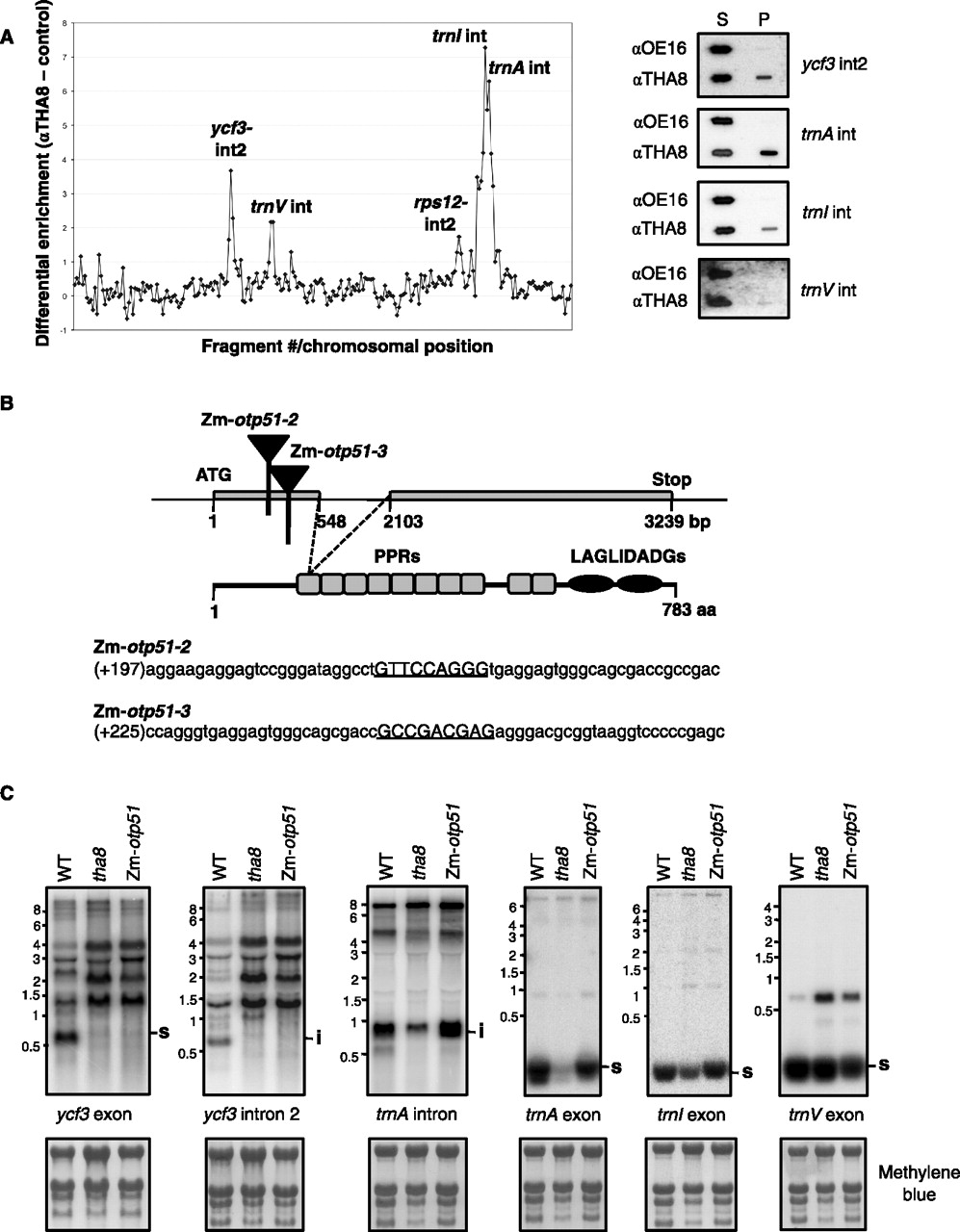
THA8 is found in intron-containing complexes and is required for the splicing of two chloroplast introns. (A) RIP-chip experiment using THA8 antiserum. The log2-transformed enrichment ratios (ratio of signal in the immunoprecipitation pellet versus supernatant) are plotted according to position on the chloroplast genome after subtracting values obtained in a negative control immunoprecipitation with antibody to OE16 (left). Coimmunoprecipitation of RNAs represented by the prominent peaks was further tested by slot-blot hybridization of RNA purified from immunoprecipitation supernatants (S) and pellets (P) (right). (B) Zm-otp51 mutants. Zm-otp51 corresponds to maize locus GRMZM2G325019. The positions of the Mu insertions are marked with triangles. The mutant progeny of a complementation cross between Zm-otp51-2 and Zm-otp51-3 was used for the RNA analyses. The sequences flanking the insertion sites are shown below, with the 9-bp target site duplications underlined. (C) RNA gel-blot hybridizations demonstrating chloroplast splicing defects in a tha8 mutant. Gels included ∼5 μg of seedling leaf RNA from plants of the indicated genotypes. The rRNAs on the same filters, detected by staining with methylene blue, are shown below. (s) Mature spliced product, (i) excised intron.




