


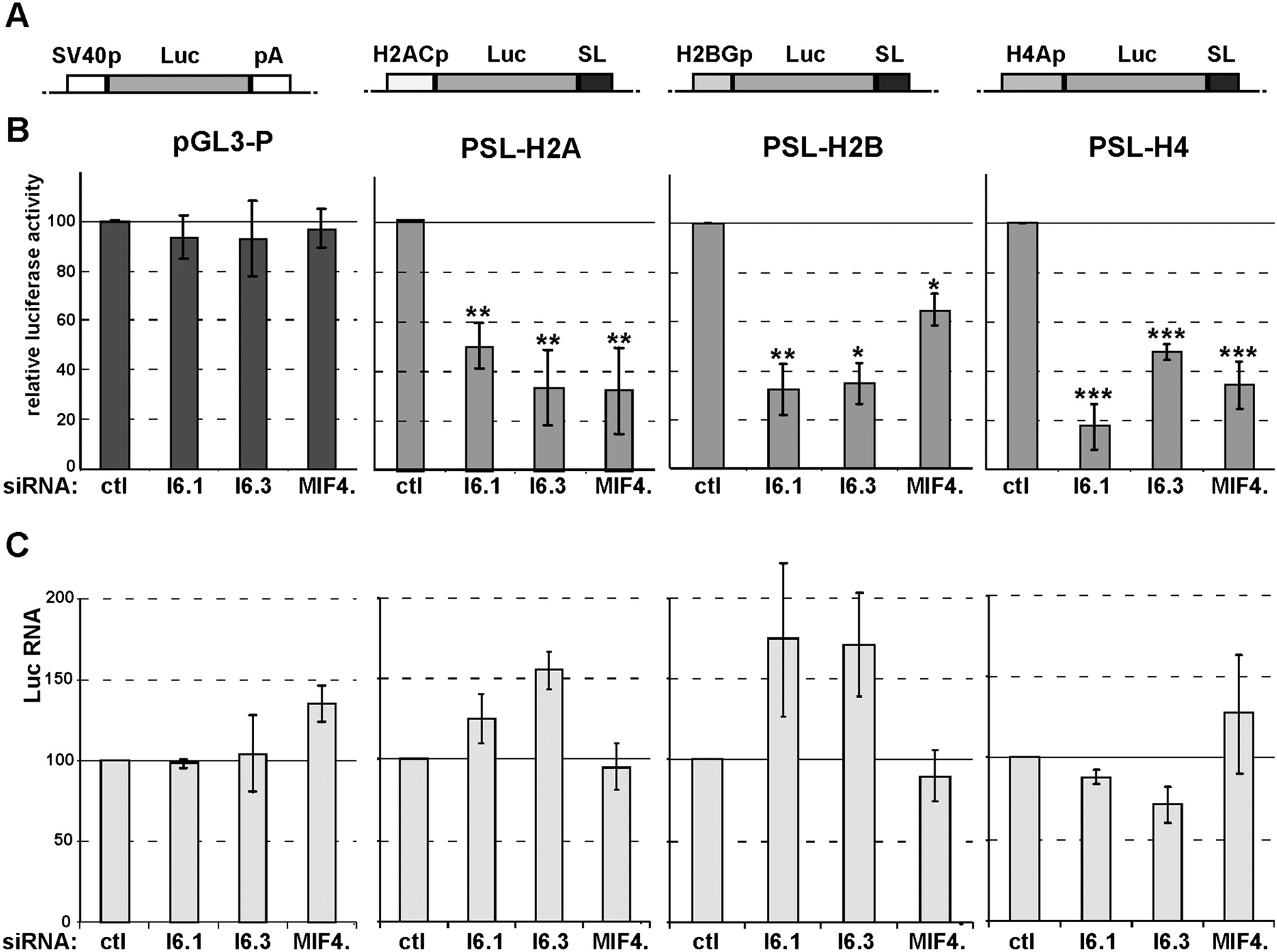
INT6 and MIF4GD requirement for efficient translation of mRNA ending with the histone stem–loop regulatory element. (A) Schematic representation of the four reporter constructs including the firefly luciferase coding sequence under control of an SV40 promoter and a poly(A) signal (pGL3-P) or under control of the promoter and stem–loop elements of the following human histone genes: HIST1H2AC (PSL H2A), HIST1H2BG (PSL-H2B), and HIST2H4A (PSL-H4). (B) After treatment with control, I6.1, I6.3, or MIF4GD siRNA duplexes, HeLa cells were transfected with these different constructs together with a Renilla luciferase expression vector to normalize transfection efficiency. Firefly and Renilla activities were measured in protein extracts of these cells using the dual luciferase assay. The graphs represent the means of the ratio with respect to the control siRNA condition of three independent experiments for the various siRNAs and reporter constructs as indicated. The error bar corresponds to the standard deviation, and stars are indicative of the results of the Student's t-test as described in the legend to Figure 2. (C) In these experiments, part of the transfected cells were kept aside to quantify the firefly and Renilla luciferase mRNA by RT-QPCR. The graphs represent the ratio of firefly luciferase mRNA amounts with respect to the control siRNA condition after normalization with Renilla luciferase mRNA for the various reporter constructs and RNA.




