


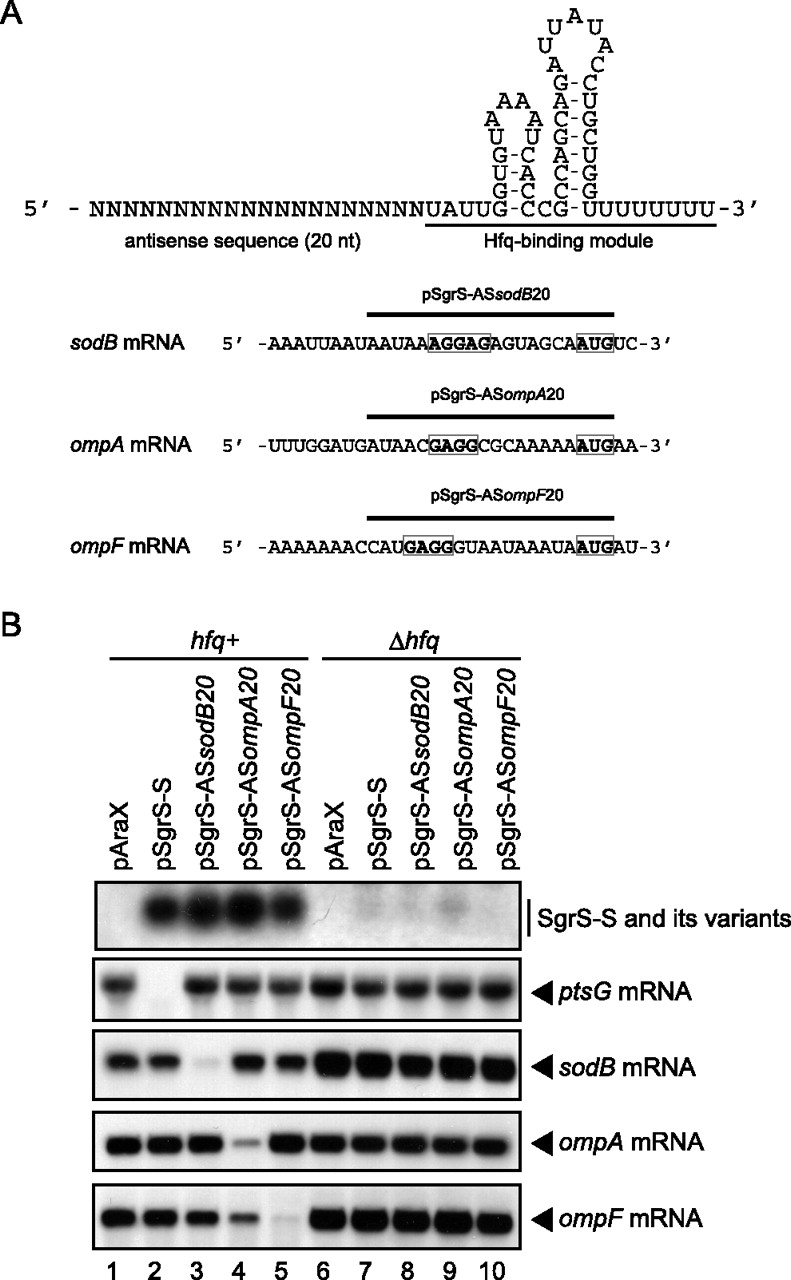
Design of synthetic Hfq-binding sRNAs. (A) Organization of synthetic Hfq-binding sRNAs. The Hfq-binding module is derived from SgrS. (N) The antisense sequence (20 nt) complementary to the translation initiation region of target mRNAs. Sequences of the translation initiation region of sodB, ompA, or ompF mRNAs are shown below. The upper bars represent the sequences corresponding to the antisense sequences used. The Shine-Dalgarno sequences and the translation initiation codons are boxed. (B) Expression and silencing ability of synthetic Hfq-binding sRNAs. IT1568 (hfq+) and TM589 (Δhfq) cells harboring indicated plasmids were grown in LB medium containing 0.2% arabinose. Total RNAs were prepared. The RNA samples were subjected to Northern blot analysis using SgrS probe 2, a ptsG probe, an sodB probe, an ompA probe, and an ompF probe. The following amounts of RNAs were loaded: SgrS-S variants, 5 μg; ptsG mRNA, 10 μg; sodB mRNA, 5 μg; ompA mRNA, 1 μg; ompF mRNA, 1 μg.




