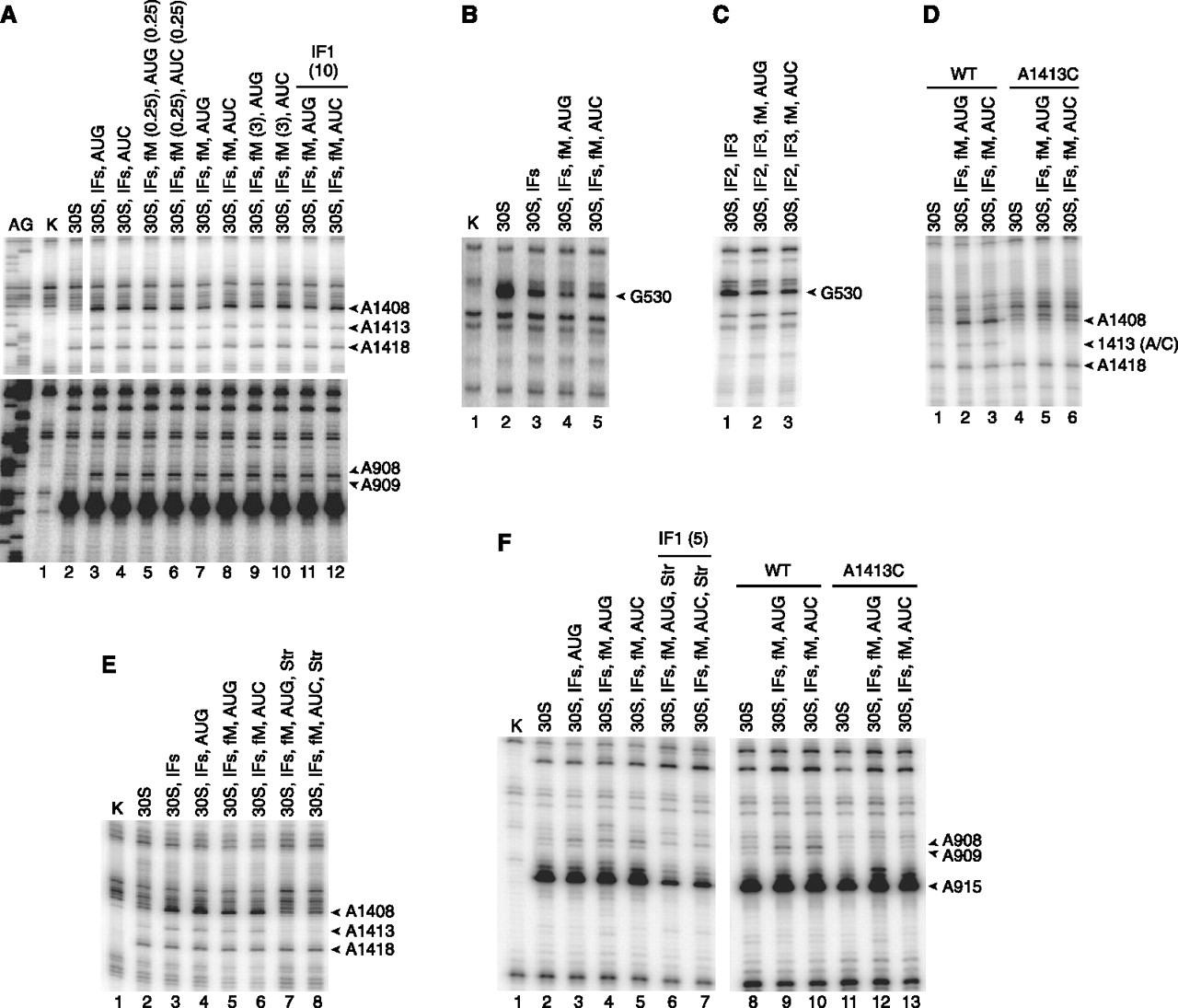
Start codon recognition, mutation A1413C, and streptomycin reduce the reactivity of A1408 in the context of the 30SIC. Complexes were formed by incubating 30S subunits (30S, 0.25 μM) in the absence or presence of various ligands ([IFs] initiation factors, 0.5 μM each; [AUG] mRNA with AUG start codon, 1.0 μM; [AUC] mRNA with AUC start codon, 1.0 μM; [fM] fMet-tRNA, 0.5 μM; [Str] streptomycin, 20 μM) as indicated. GTP (100 μM) was present in all cases. Numbers in parentheses specify micromolar concentrations of ligands when they differ from the standard conditions listed above. Complexes were treated with DMS or KE, and RNA was extracted and analyzed by primer extension. (Lanes A,G) Sequencing reactions; (lanes K) analyses of untreated 30S subunits. (A) DMS probing of the 1408 and 908 regions. (B,C) KE probing of the 530 region. (D) DMS probing of the 1408 region of wild-type (WT) and mutant (A1413C) 30S subunits. (E) DMS probing of the 1408 region in the presence of streptomycin (Str). (F) Effects of streptomycin and mutation A1413C on DMS reactivity in the 915 region.