


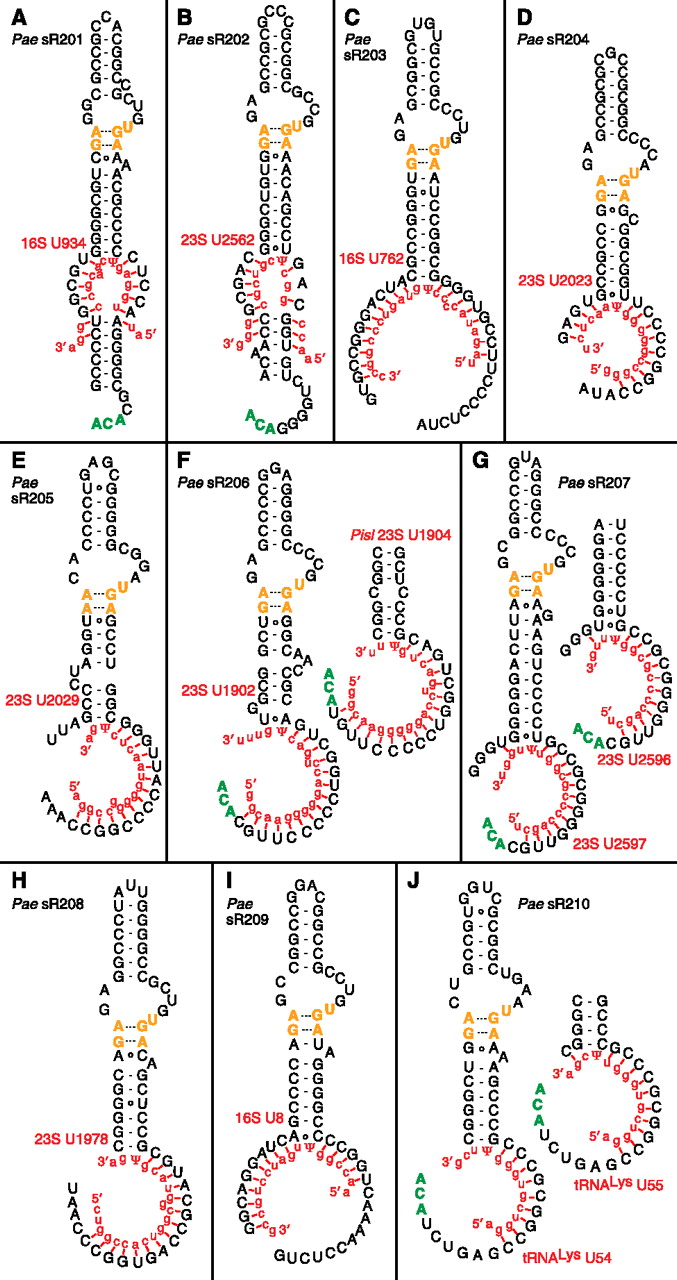
Pseudouridylation guide sRNAs identified in Pyrobaculum. The predicted secondary structures of the Pyrobaculum pseudouridylation guide sRNAs and their predicted targets in ribosomal and transfer RNA (red sequences aligned to guides) are illustrated. (A,B) Canonical pseudouridylation guide sRNAs, containing an upper apical stem, internal kink-turn bulge (K-turn motif in orange), intermediate stem, pseudouridylation pocket, lower helix, and 3′ ACA sequences. The specific boundary between guides and the lower stem is uncertain in these two structures, as both target-pairing and stem-pairing interactions are plausible. Note that the uridine (U) modified in the target RNA is positioned at the base of the intermediate stem and that base-pairing between the guide and the target RNAs occurs both 5′ and 3′ to the site of modification. (C–J) Noncanonical pseudouridylation guides, all without a lower helix, some without the 5′ portion of the pseudouridylation pocket, and many without the terminal 3′ ACA sequence (green). The numbering for the predicted modified uridine, indicated at the base of each structure, uses the P. aerophilum rRNA numbering system.




