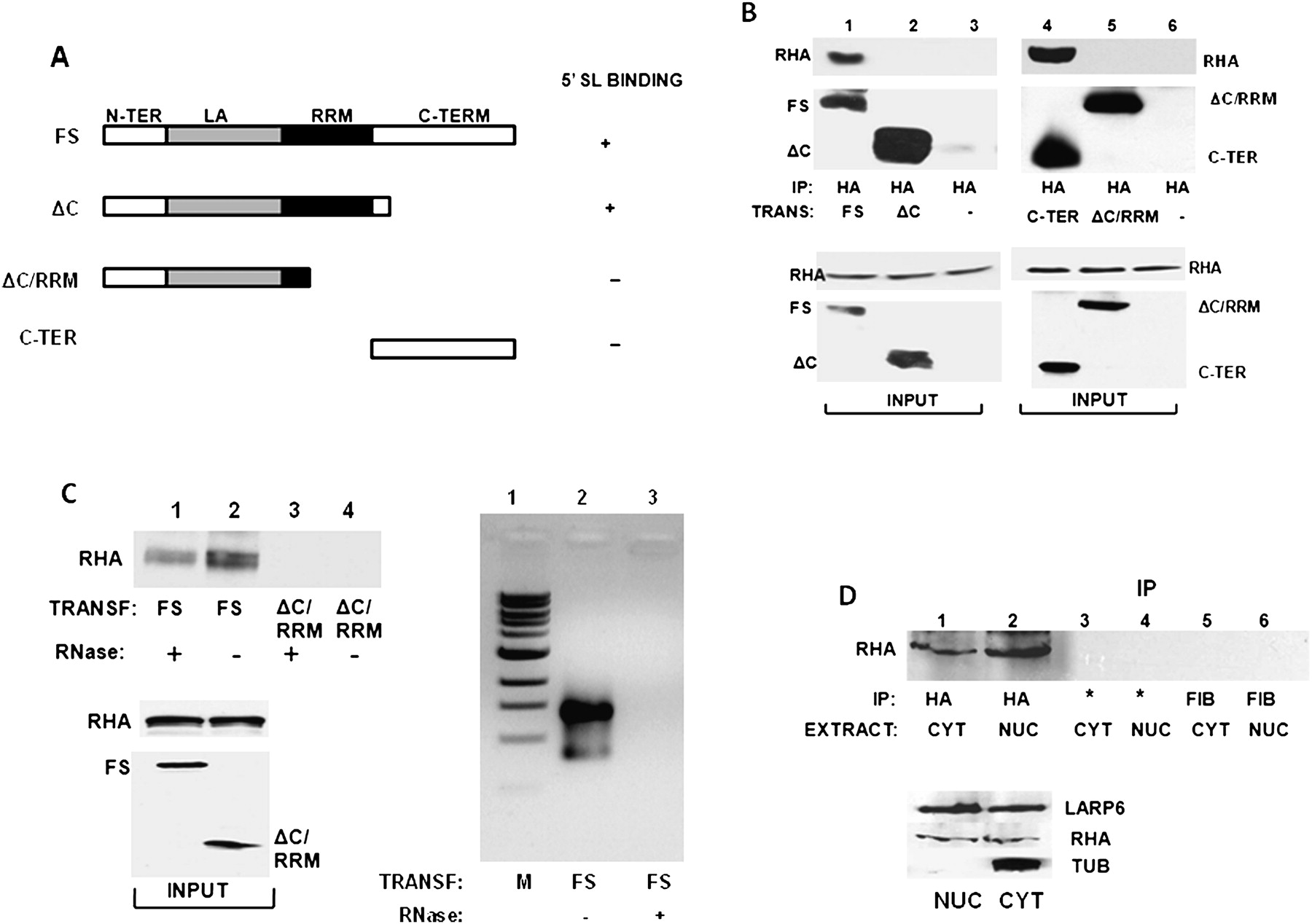
LARP6 interacts with RHA. (A) Schematic representation of LARP6 constructs used in immunoprecipitations (IP). All constructs had an HA-tag at the N terminus. (FS) Full-size LARP6 with the domains indicated. The ability of the constructs to bind 5′ SL RNA is indicated as + or −. (B) IP of RHA with LARP6. The constructs shown in A were transfected into HEK293 cells, and IP was performed using anti-HA antibody. IP material was analyzed by Western blot with anti-RHA antibody (RHA) and anti-HA antibody (FS, ΔC, ΔC/RRM, and C-TER). (Bottom panels) Expression of proteins in the input material. (–) Nontransfected cells. (C) Intact RNA is not required for LARP6/RHA interaction. (Left top panel) IP of RHA with FS and ΔC/RRM LARP6 constructs after digestion of the samples with RNase A (lanes 1,3) or without RNase A digestion (lanes 2,4). (Left bottom panel) Expression of proteins in the input material. (Right panel) RNA from untreated extracts (lane 2) and extracts treated with RNase A (lane 3) was analyzed by agarose gel electrophoresis. (Lane 1) Size marker. (D) Interaction of LARP6 and RHA in the nuclear extract. HEK293 cells were transfected with full-size HA-tagged LARP6, and cytosolic (CYT) and nuclear (NUC) extracts were used for IP with anti-HA antibody (lanes 1,2), protein A/G beads without antibody (*, lanes 3,4), and anti-fibronectin antibody (lanes 5,6). (Top panel) Analysis of RHA in the IP samples. (Bottom panel) Analysis of the proteins in the input material.