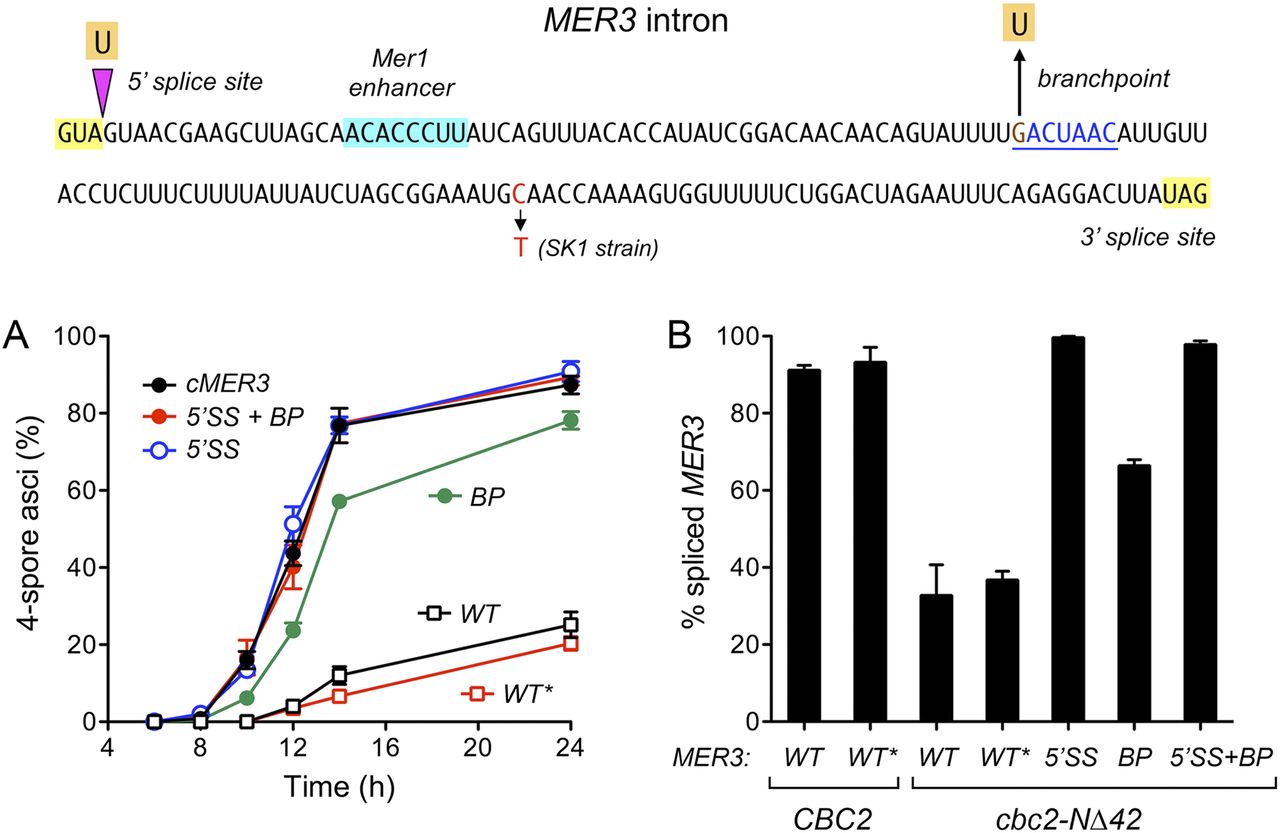
Nonconsensus MER3 intron features dictate the cbc2-NΔ42 sporulation defect. The nucleotide sequence of the MER3 intron of yeast strain W303 is shown, highlighting its nonconsensus 5′ splice site and branchpoint and the location of its Mer1 enhancer (shaded in cyan). The point mutations (5′SS and BP) that we introduced into the MER3 intron are indicated. A single C-to-T difference in the MER3 intron of the yeast SK1 strain (from which SKY is derived) is highlighted in red. (A) cbc2-NΔ42 diploids with the indicated chromosomal MER3 alleles were examined by light microscopy at the indicated times after transfer to sporulation medium. The percentages of the cell population comprising four-spore asci are plotted as a function of time. (B) RNAs isolated from the indicated diploid CBC2 or cbc2-NΔ42 SKY strains (with chromosomal MER3 alleles as specified) at 4 h post-transfer to sporulation medium were reverse transcribed with a MER3 antisense primer complementary to the 3′ exon. The cDNAs were then PCR-amplified with sense and antisense primers flanking the MER3 intron. The splicing efficiencies are plotted; each datum is the average of three separate experiments ±SEM.