


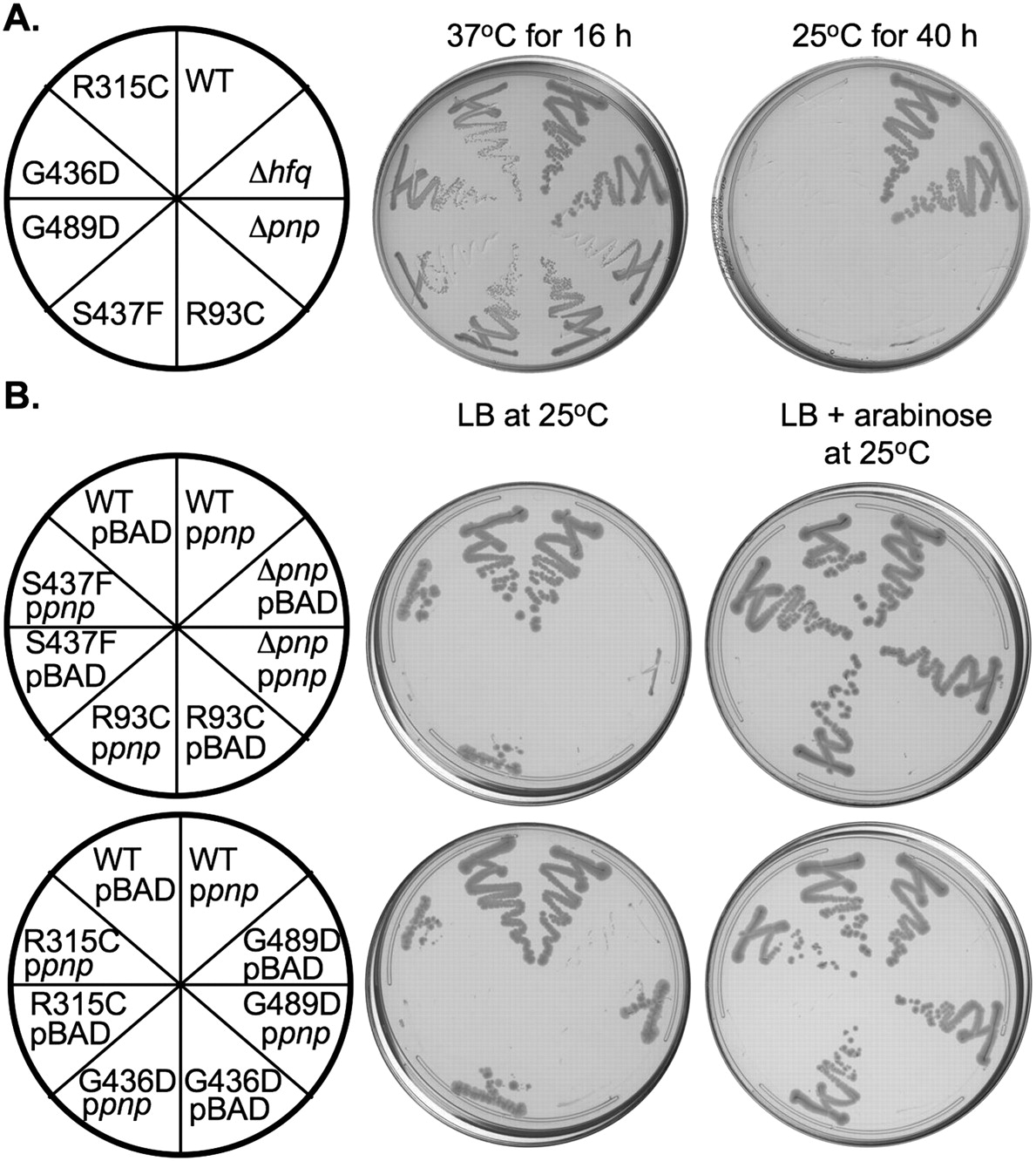
The growth of the pnp mutants isolated in the combined genetic selection and screen at 37°C and 25°C. (A) Strains DJ624 (WT), or isogenic derivatives harboring a Δhfq mutation (NRD459), a Δpnp mutation (NRD473), or a point mutation in pnp that encodes a PNPase with an R93C (NRD453), S437F (NRD457), G489D (NRD493), G436D (NRD494), or an R315C (NRD495) substitution were streaked onto two LB plates. One plate was incubated at 37°C for 16 h, and the other was incubated at 25°C for 40 h. (B) The wild-type strain or the pnp mutants from A were transformed with pBAD30 (pBAD) or a plasmid derivative that expresses PNPase from an arabinose-inducible promoter (pNRD412; ppnp), streaked out onto an LB plate containing ampicillin or an LB plate containing ampicillin and arabinose at a final concentration of 0.1%, and then incubated at 25°C for 48 h. The results are representative of three experiments.




