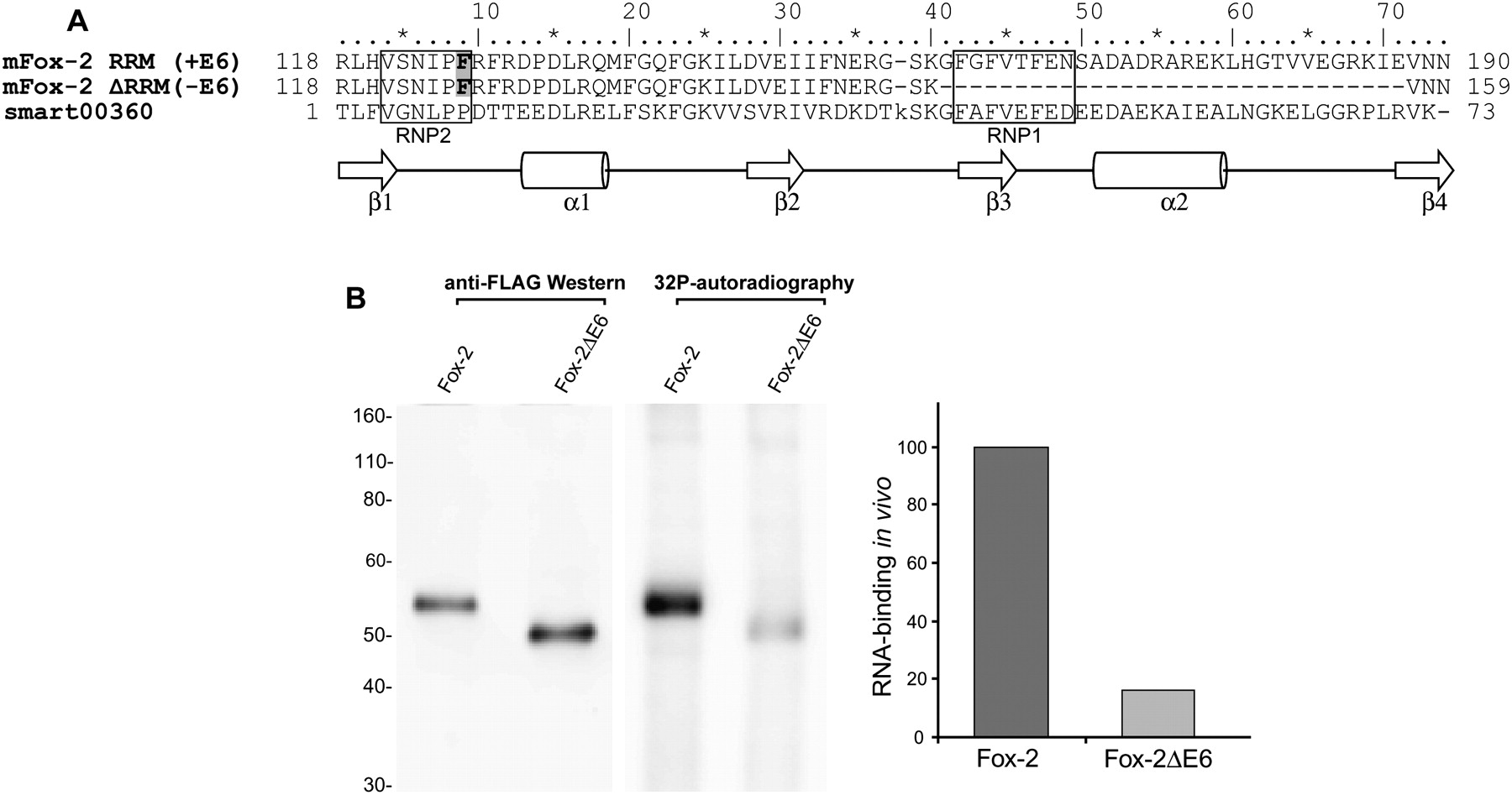
The alternative RRM exon encodes the second half of the Fox RRM. (A) The RRM domain of mouse Fox-2 is aligned with the RRM model SMART00360 by a search engine for conserved protein domains (http://www.ncbi.nlm.nih.gov/Structure/cdd/wrpsb.cgi). The characteristic RNP1 and RNP2 features are boxed and the secondary structure is drawn to scale below. Skipping of the alternative exon causes deletion of the second half of the RRM, including β-strand 3 and α-helix 2. Fox-2ΔE6 binds RNA weakly in vivo. (B) FLAG-tagged Fox-2 and Fox-2ΔE6, lacking exon 6, were transiently expressed in HEK293 cells and UV-cross-linked in vivo. The FLAG-tagged proteins were affinity purified from cellular lysates pretreated with RNase A. The RNA–protein cross-links were 32P-labeled. After separation by SDS-PAGE, the proteins were transferred to PVDF membrane. (Left) The RNA–protein cross-links were detected and quantified by PhosphorImager and the total protein quantified by FLAG Western. (Right) The normalized RNA binding of Fox-2 and RBMΔE6.