


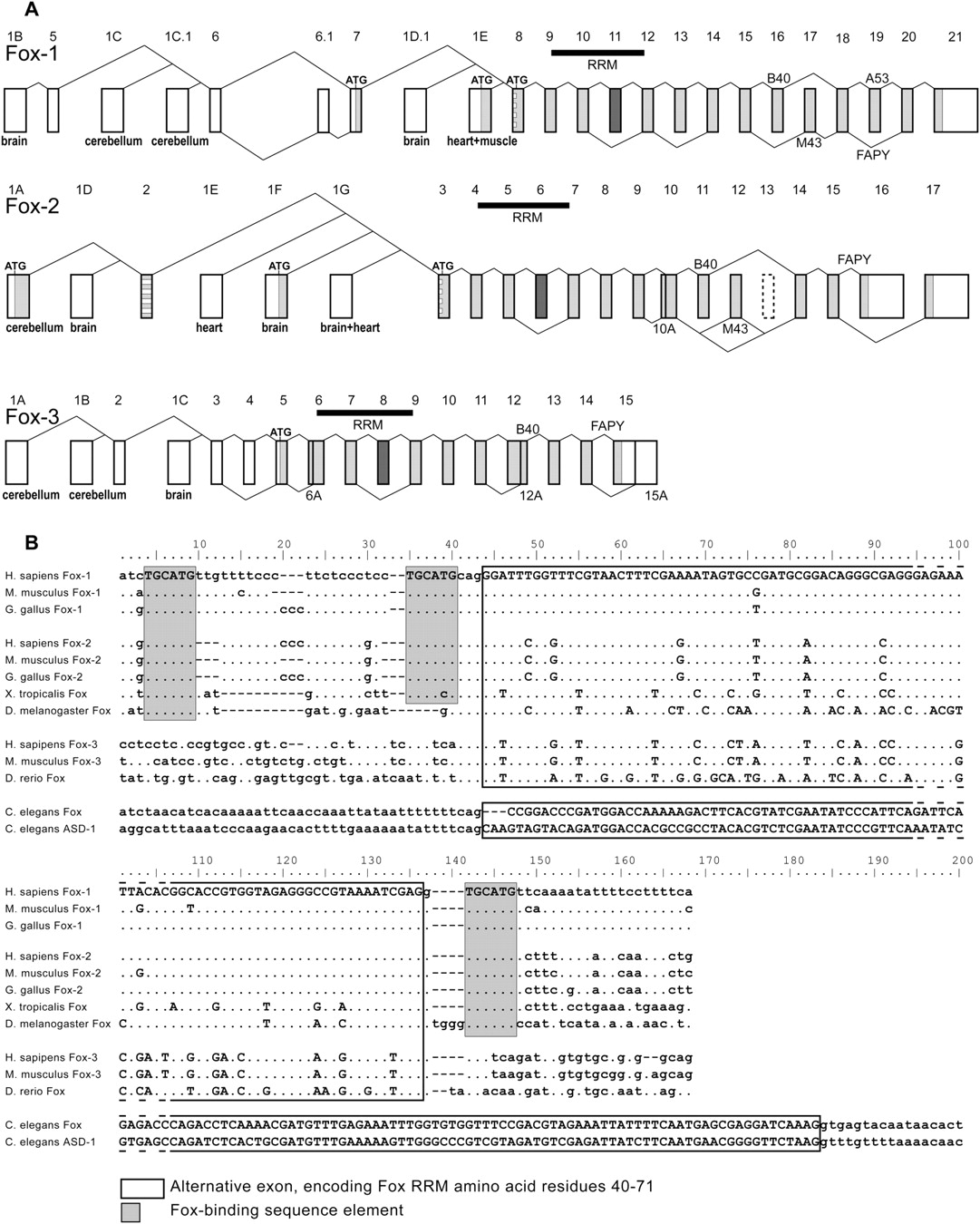
Diagram of the mouse Fox genes. (A) The exons are shown as boxes. The coding sequence is shown in light gray, and the alternative in-frame start codons are indicated. The dark-gray box represents the alternative exon encoding the second half of the RRM domain. The exon annotation of Fox-1 and Fox-2 is as described for the human genes (Underwood et al. 2005). Exons 1C.1 and 1D.1 of Fox-1 derive from mouse-specific promoters. Alternative exons B40, M43, and A53 (Nakahata and Kawamoto 2005) and the FAPY C-terminal splice isoforms are also indicated. Fox-2 exon 13 (dashed box) is seen in human but not found in mice. The tissue specificity of the mouse Fox first exons is indicated below. The relative expression of these exons in mouse brain, heart, and skeletal muscle are compared in Supplemental Figure S1. Alignment of human and mouse alternative Fox RRM exons, the corresponding chick, frog, fish, and fly Fox exons, and the flanking splice sites (B). The sequences are grouped according to their similarity to the human Fox genes. The corresponding protein coding regions of the worm Fox genes are shown below. The exon and the UGCAUG elements are marked by open and gray boxes as indicated.




