


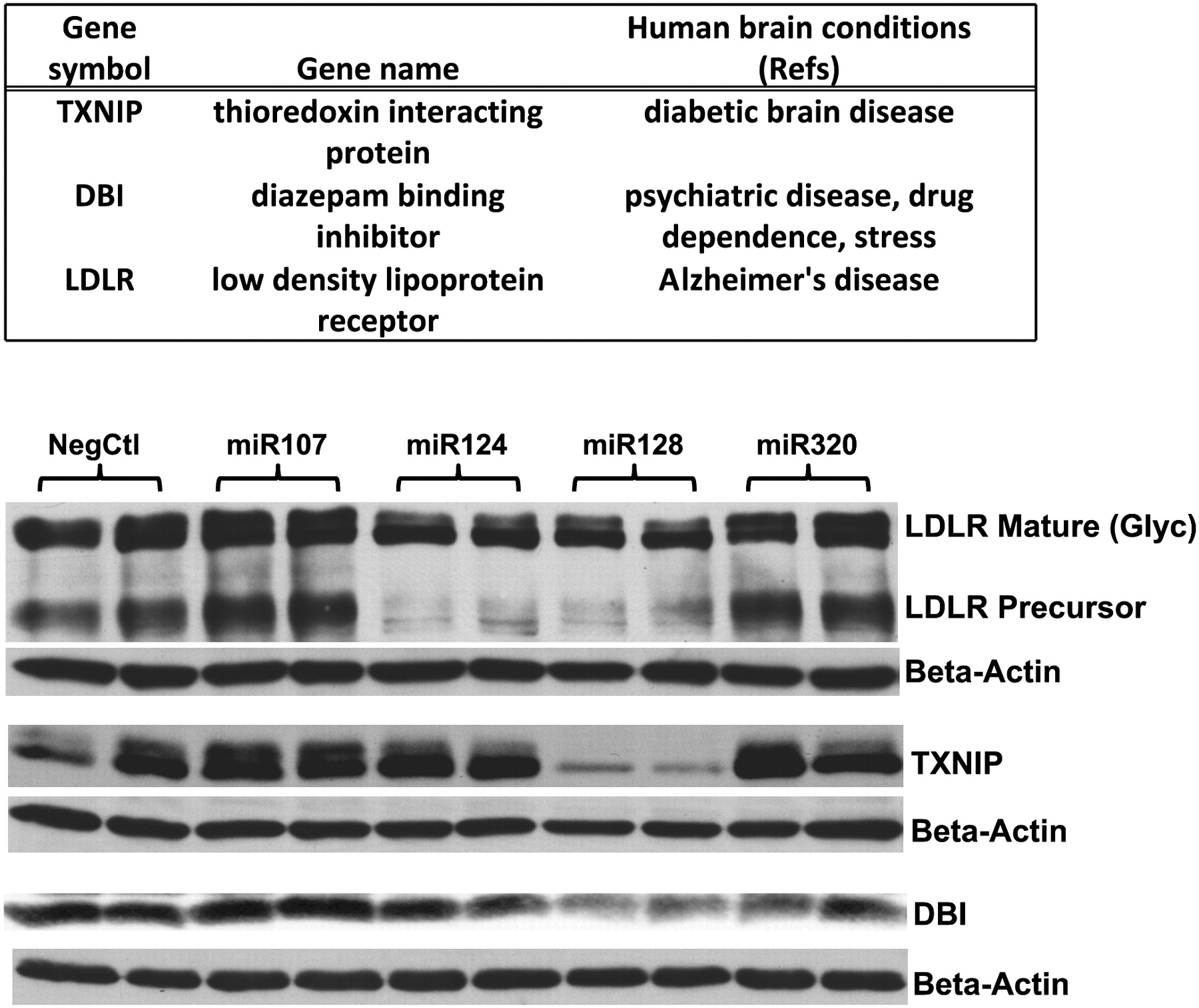
Western blot analysis after miRNA transfections helped validate RIP-Chip results. H4 cells were first transfected with full-length cDNA plasmids: pCMV6-LDLR, pCMV6-TXNIP, and pCMV6-DBI for 24 h, and were then transfected with 25 nM of miR-107, miR-124, miR-128, miR-320 precursors, or a negative control miRNA for additional 48 h. Cells were harvested, and Western blot analyses were performed using antibodies against each expressing proteins. Anti-β-actin antibody was used to probe each blot to monitor the total protein loadings. The three miR-128 targeted proteins shown were effectively knocked down by miR-128 transfection. LDLR was also strongly reduced by miR-124 transfection. RIP-Chip did not identify LDLR as miR-124 target, however, microarray analysis of total cell RNA showed that LDLR mRNA was significant decreased upon miR-124 transfection.




