


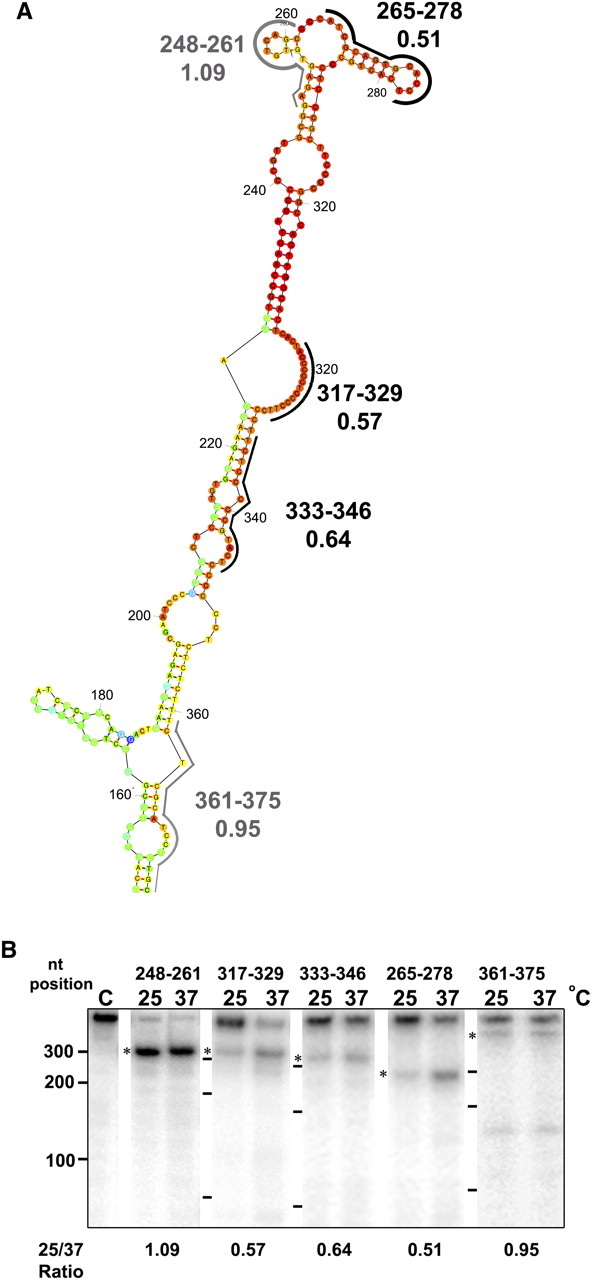
RNA melting measured by RNase H cleavage. (A) Location of the antisense oligonucleotides on the predicted RNA structure. The oligonucleotides used for the RNase H assay are positioned on the predicted RNA structure (black lines), and the ratio between the intensity of the two cleavage products is indicated (25/37). Black lettering represents regions that melt at elevated temperatures (25/37 < 1) and gray lettering marks regions that are not affected by temperature elevation (25/37 = 1). (B) RNase H cleavage directed by hybridization of the RNA fragment preincubated at different temperatures. The end-labeled RNA (1–472) was exposed to different temperatures (25°C or 37°C), then incubated with different oligonucleotides and cleaved by RNase H at the corresponding temperature. The RNase H cleavage products were separated over 6% denaturing polyacrylamide gels. Migration of the untreated full-length 1–472 RNA product is shown at the left. Products of the RNase H cleavage reaction following hybridization with oligonucleotides at different temperatures are marked with a star. The oligonucleotide positions in the 3′ UTR are indicated above the lanes. Size markers of 100, 200, and 300 nt are depicted at the left side of each panel (numbers at the far left and short lines between the panels). The ratio between the intensity of the two bands (25/37) is shown at the bottom of each panel.




