


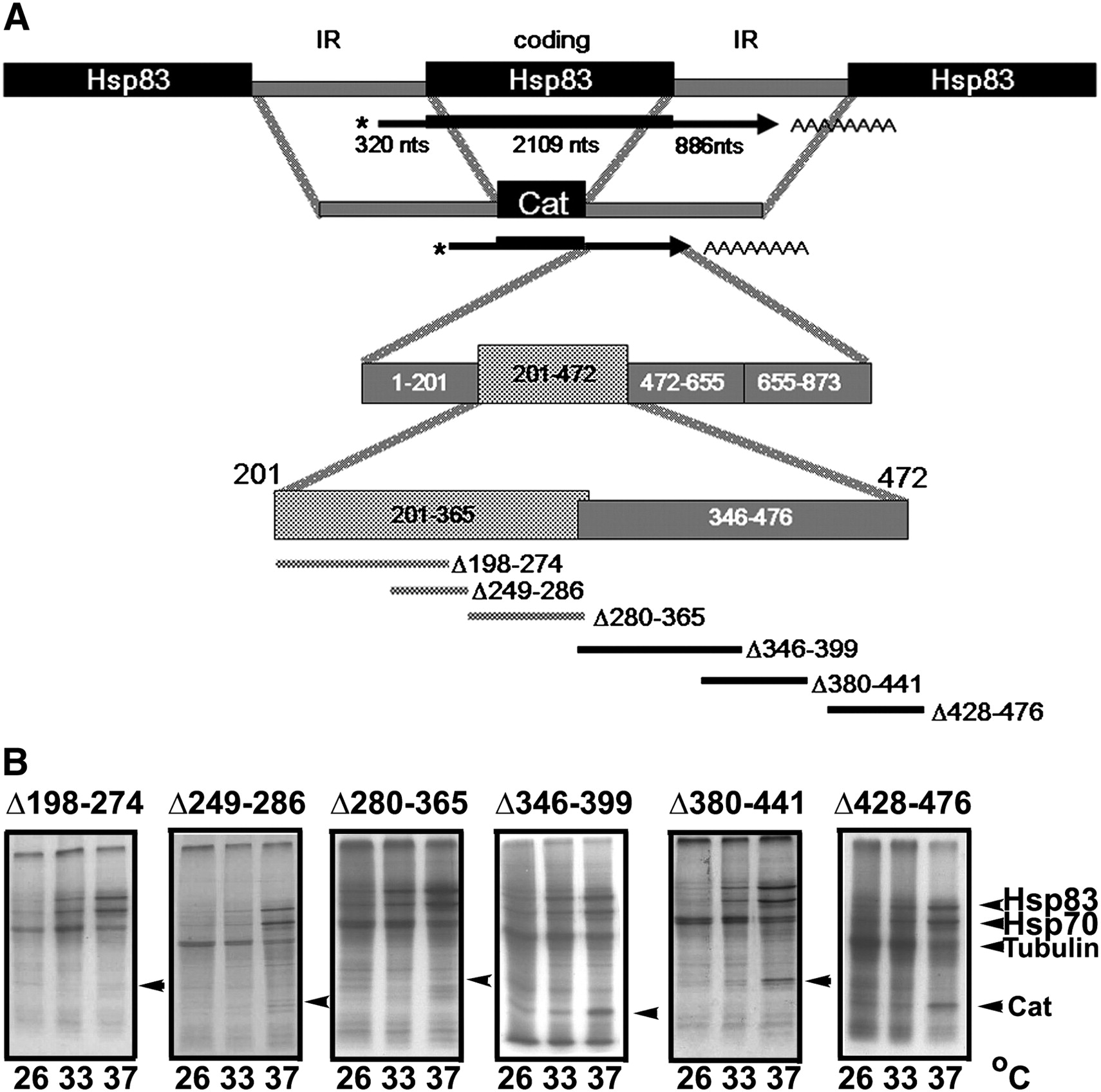
Preferential translation of Hsp83 is directed by sequences 201–346 in the 3′ UTR. (A) The CAT reporter gene was flanked by complete IRs derived from the Hsp83 genomic cluster, so that the signals for RNA processing were maintained on both sides. The resulting constructs were cloned into the pX transfection vector of Leishmania and used to generate stable cell lines. (B) De novo synthesis of the CAT reporter gene was examined by metabolic labeling of the transgenic parasite cells grown at 26°C, and after their preincubation at 33°C, or 37°C, during 60 min. Protein extracts were separated over 12% polyacrylamide gels. Migration of CAT, Hsp70, Hsp83, and the α- and β-Tubulins are marked with arrowheads.




