


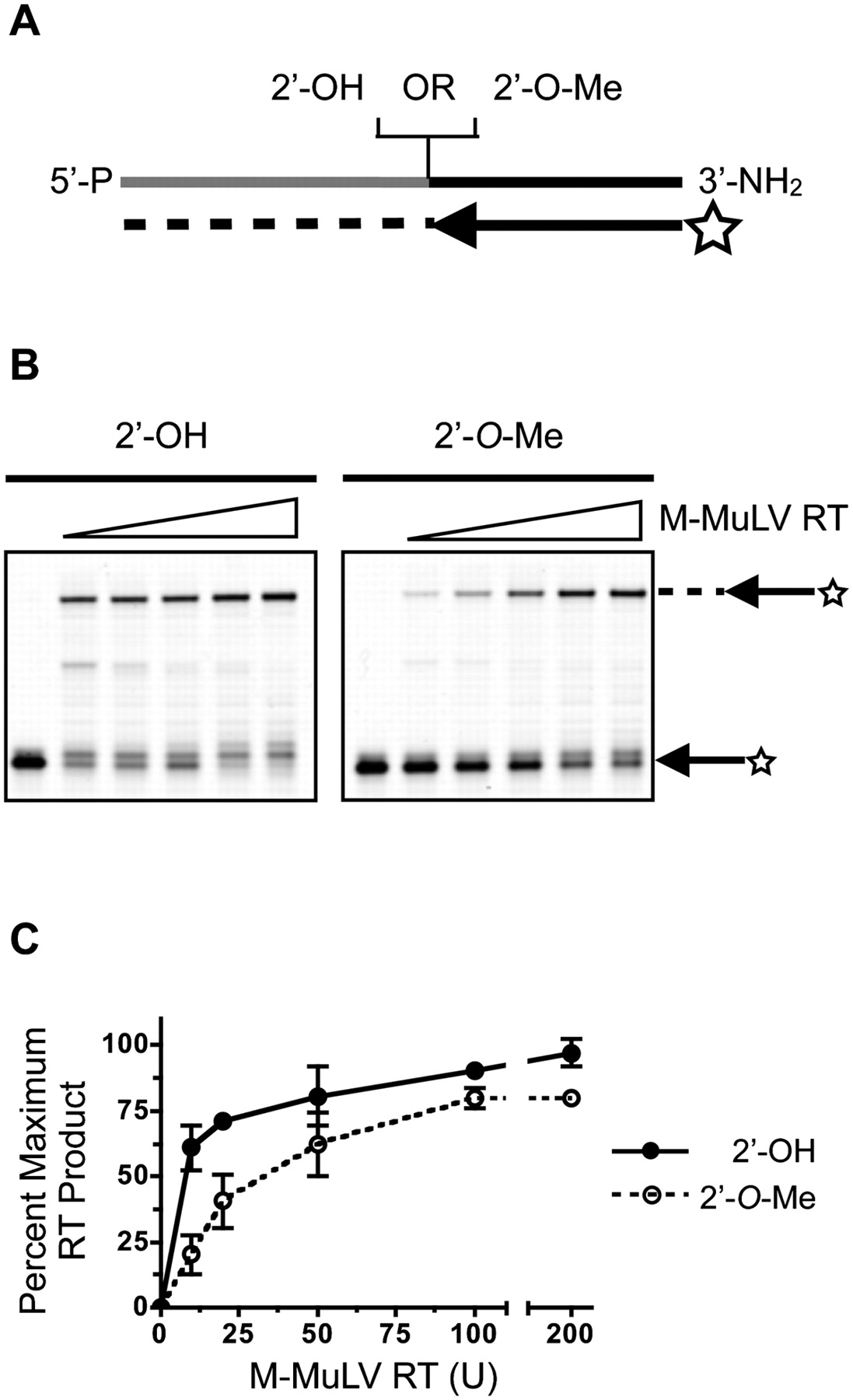
Impairment of reverse transcription across 2′-O-methyl residues in small RNA ligation products. (A) Schematic representation of reverse transcription reactions. 5′-End IRDye 700 labeled reverse transcription primers were hybridized to a chimeric single-stranded RNA/DNA oligo that mimics 3′-ligated small RNAs. The RNA residue adjacent to the 5′-most DNA residue was either 2′-O-methyl, or 2′-hydroxyl as indicated. (Gray) The RNA part of the oligo; (black) the DNA; (star) IRDye 700; (dashed line) cDNA. (B) M-MuLV Reverse transcriptase titration. Reverse transcription was performed using increasing amounts of M-MuLV-RT (0, 10, 20, 50, 100, and 200 units). Primer extension products were resolved by denaturing PAGE and visualized by IR fluorescence imaging. (−) No enzyme. (C) Reverse transcription efficiency. Reverse transcription efficiency of 2′-OH and 2′-O-Me templates was quantified by densitometry of scanned gels. Percent maximum yield refers to the proportion of extension products normalized for the molar excess of primer over template. The data shown represent the mean ± SEM of two independent experiments.




