


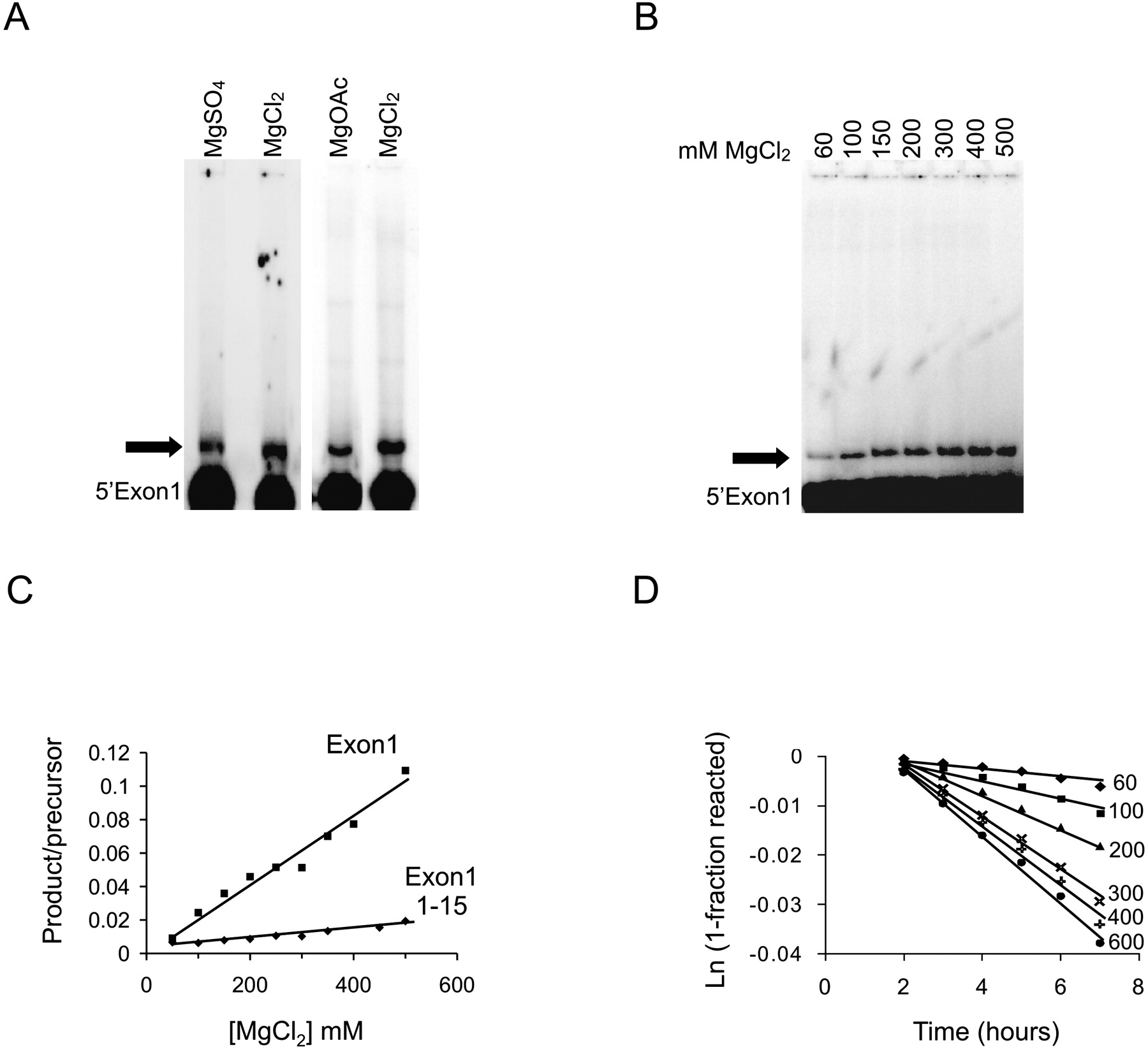
Role of metal ions in the snRNA-mediated splicing reaction. Arrows point to the product. Location of unreacted 5′ Exon1 precursor is shown next to each gel panel. (A) Use of magnesium acetate or sulfate instead of MgCl2 does not have a significant effect on the reaction. (B) The efficiency of product formation is increased as magnesium concentration is raised from 60 to 500 mM. (C) The efficiency of product formation in a range of MgCl2 concentrations in a typical two-step splicing reaction versus the isolated second step. The data set labeled “Exon1” is obtained from a typical snRNA-catalyzed two-step splicing reaction. The data set labeled “Exon1 1–15” reflects data from an isolated second step reaction. (D) First-order rate constant graphs for reactions performed at MgCl2 concentrations ranging from 60 to 600 mM. The MgCl2 concentration (in mM) for each set of data points is indicated in the graph.




