


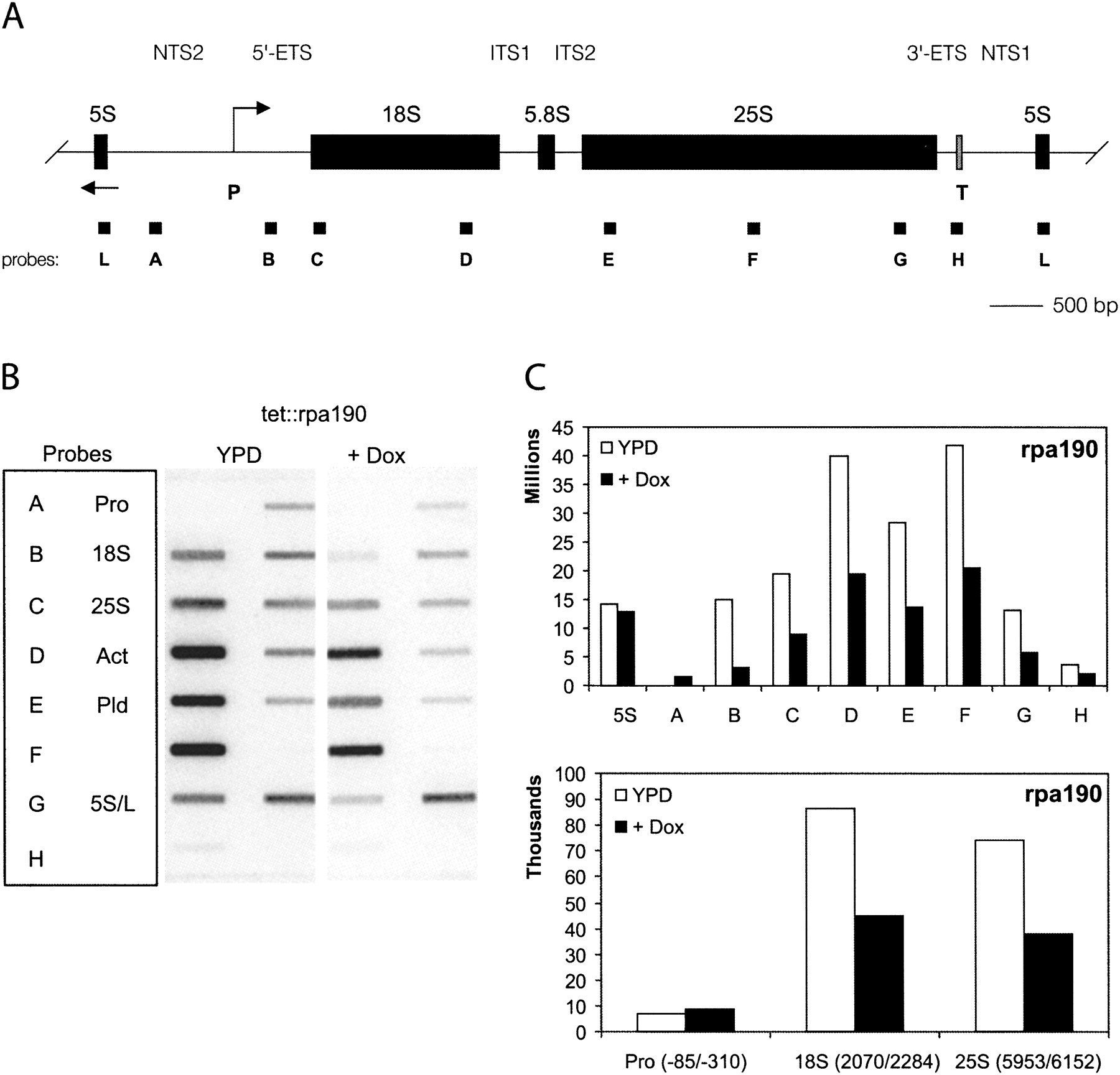
High-resolution transcriptional run-on (TRO) analysis of Rpa190 depletion. (A) Yeast rDNA unit. See Figure 1 for description. Probes (A–L) used in the TRO analysis are indicated. (B) Rpa190 depletion strongly impacts rRNA synthesis. TRO was performed in tet::rpa190 and otherwise isogenic wild-type cells grown to mid-log phase in complete medium in the presence or absence of doxycycline (+Dox). Depletion of Rpa190 was achieved for 6 h. Each labeling was performed independently in triplicate; a representative example is shown. Slot blots were loaded with antisense oligonucleotides normalized for their A content (probes A to L) and, for comparison, with conventional single-stranded phagemids, encoding portions of the rDNA (probes Pro, 18S, 25S), the Actin gene (Act), or without insert, providing background hybridization (Pld) (see Materials and Methods). (C) Results presented in panel B were quantitated with a PhosphorImager (Typhoon 9200, GE Healthcare). (Top panel) TRO analysis with oligonucleotides, and (bottom panel) with phagemids (rRNA regions targeted in the hybridizations are indicated).




