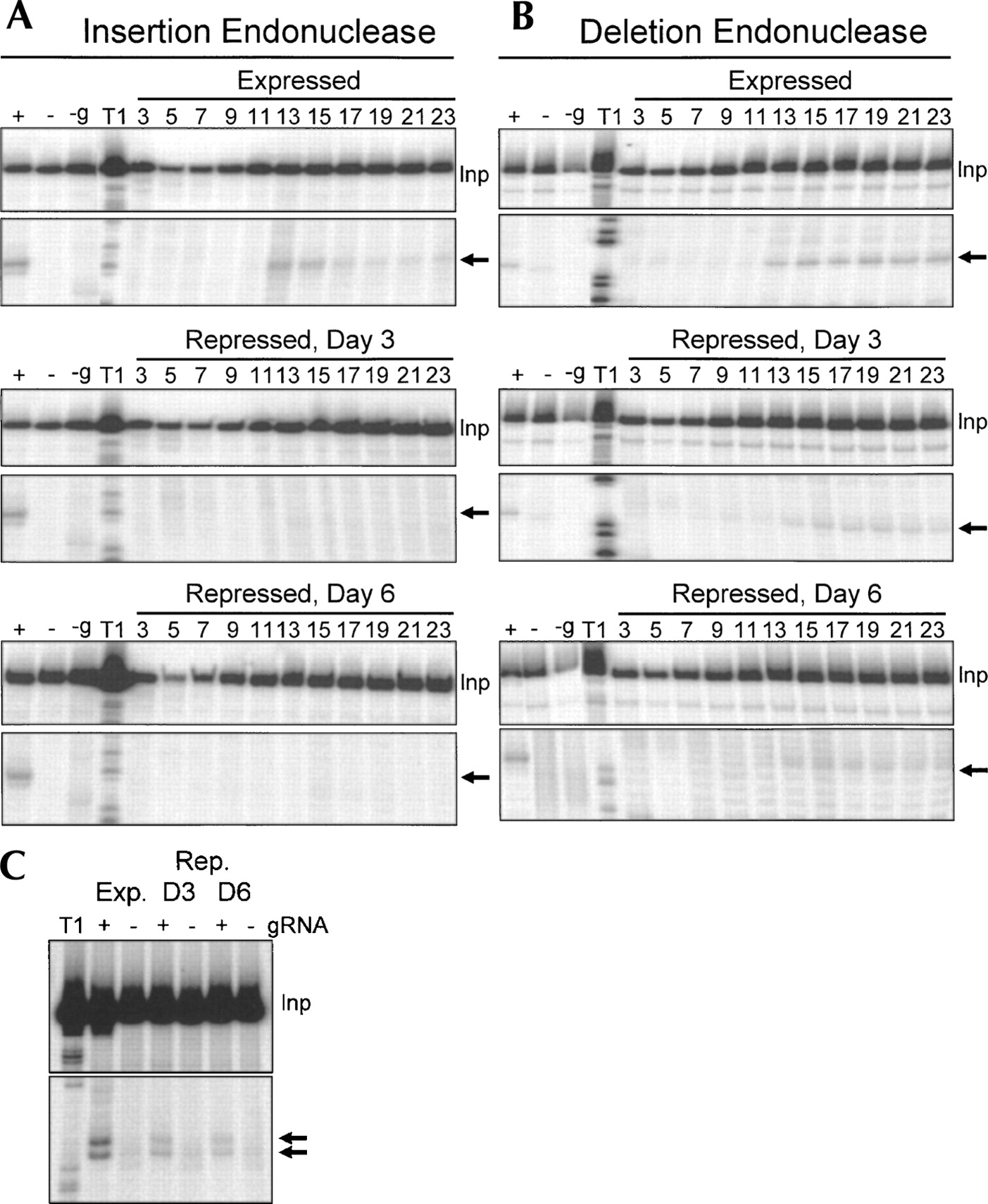
Repression of KREPB4 expression in PF RNAi cells reduces insertion and deletion endonuclease activities in vitro. Insertion (A) and deletion (B) editing assays, optimized for generation of cleavage product, were performed using the same glycerol gradient fractions that were used in the previous precleaved editing assays. The upper panels show the radiolabeled input RNA (Inp), and the lower panels show the cleavage product; the blank middle region of the gels is not shown. Both endonuclease assays were based on the A6 substrate and require two RNAs: an mRNA fragment (radiolabeled at the 3′ end) and a gRNA. Positive control reactions (+) were performed using a fraction of ∼20S editosome that contains peak editing activity, which was omitted from negative control reactions (−). The position of the specific, gRNA-directed cleavage product is indicated by an arrow. gRNA was omitted from control reactions (−g). RNase T1-digested substrate RNA (T1) was used as a marker to determine where substrate RNA was cleaved. (C) Glycerol gradient fraction 17 from expressed (Exp.) and repressed conditions (Rep., days 3 and 6) was analyzed for deletion endonuclease activity in the presence or absence of gRNA. The double band is the result of some size heterogeneity in the radiolabeled input RNA (also apparent in the T1 ladder).