


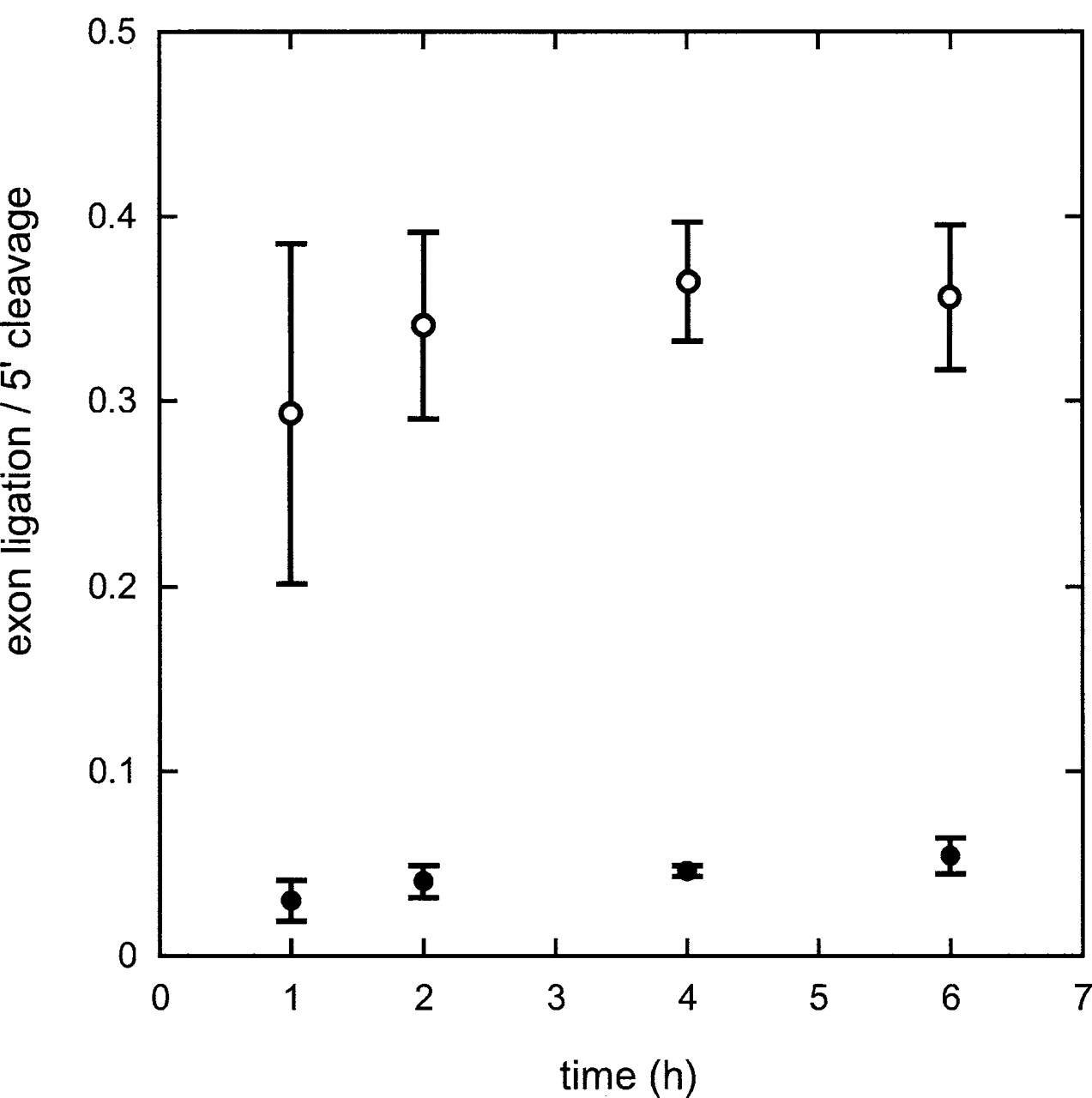
Uncoupling of reaction at the 5′ splice site and exon ligation in the Δ15 construct of intron RmInt1. Ordinates correspond to the ratio of molecules having completed exon ligation (molar fraction of ligated exons over all forms containing the 3′ exon) over those having reacted at the 5′ splice (molar ratio of lariat intermediate and lariat intron over all forms containing the intron). Δ20 (open circles) and Δ15 (filled circles) precursor transcripts begin with GGGAA followed by the last 20 and 15 nt, respectively, of the 5′ exon, the intron (nucleotides 611–1759, corresponding to part of ribozyme domain IV, were replaced by CTCGA), and 147 nt of the 3′ exon. Internally labelled precursor molecules (final concentration 40 nM) were incubated in 1M (NH4)2SO4, 40 mM Tris-Cl pH 7.5, 50 mM MgCl2 at 45°C. Reaction products were separated on denaturing polyacrylamide gels and tentatively identified by comparison with molecular weight markers. Their identity was subsequently confirmed by gel extraction followed by reverse transcription, RT-PCR, and 3′-end tagging (Ferat et al. 2003). Error bars correspond to three separate replicates.




