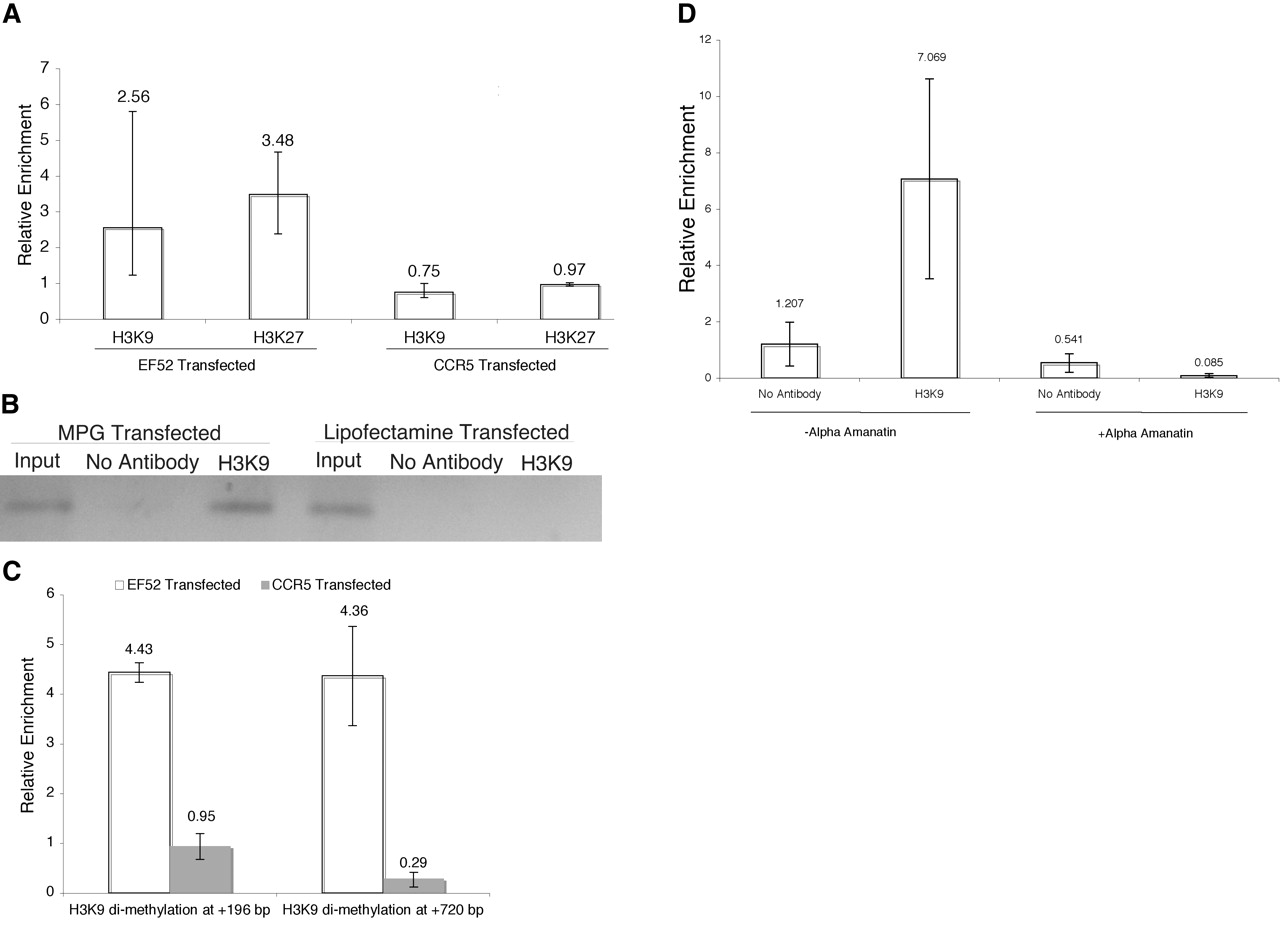
siRNA-mediated histone methylation and the requirement for RNA polymerase II function. (A) MPG-transfected EF52 siRNA induces histone methylation. Histone 3 lysine 9 (H3K9) dimethylation and histone 3 lysine 27 (H3K27) trimethylation were determined from 293T cells transfected with EF52 or the control CCR5 siRNAs (10 nM) using the nuclear-specific amphipathic peptide MPG (Morris et al. 1997). Forty-eight hours post-transfection, ChIP assays were performed specifically for the EF1A promoter (Morris et al. 2004a). Results represent a minimum of two independent experiments with the range shown. (B) Nuclear-specific delivery is required for histone methylation. MPG and Lipofectamine 2000 transfection reagents were used to transfect EF52-Cy3+ siRNAs into 293T cells. Forty-eight hours following transfection, cultures were collected and a ChIP assay was performed. (C) H3K9 dimethylation can spread 720 bp downstream of the targeted EF1A promoter. H3K9 dimethylation was measured by quantitative PCR either 196 or 720 bp downstream from the targeted EF52 promoter. siRNAs EF52 and CCR5 (10 nM) were transfected with MPG into 293T cells, and ChIP assays were performed 48 h later. Two independent experiments with the range are shown. (D) Treatment of 293T cells with α-amanatin (0.05 μg/mL) 24 h following transfection with siRNA EF52 reduces H3K9 methylation to levels comparable to the no-antibody controls. Results from three independent experiments are shown with the standard deviations.