


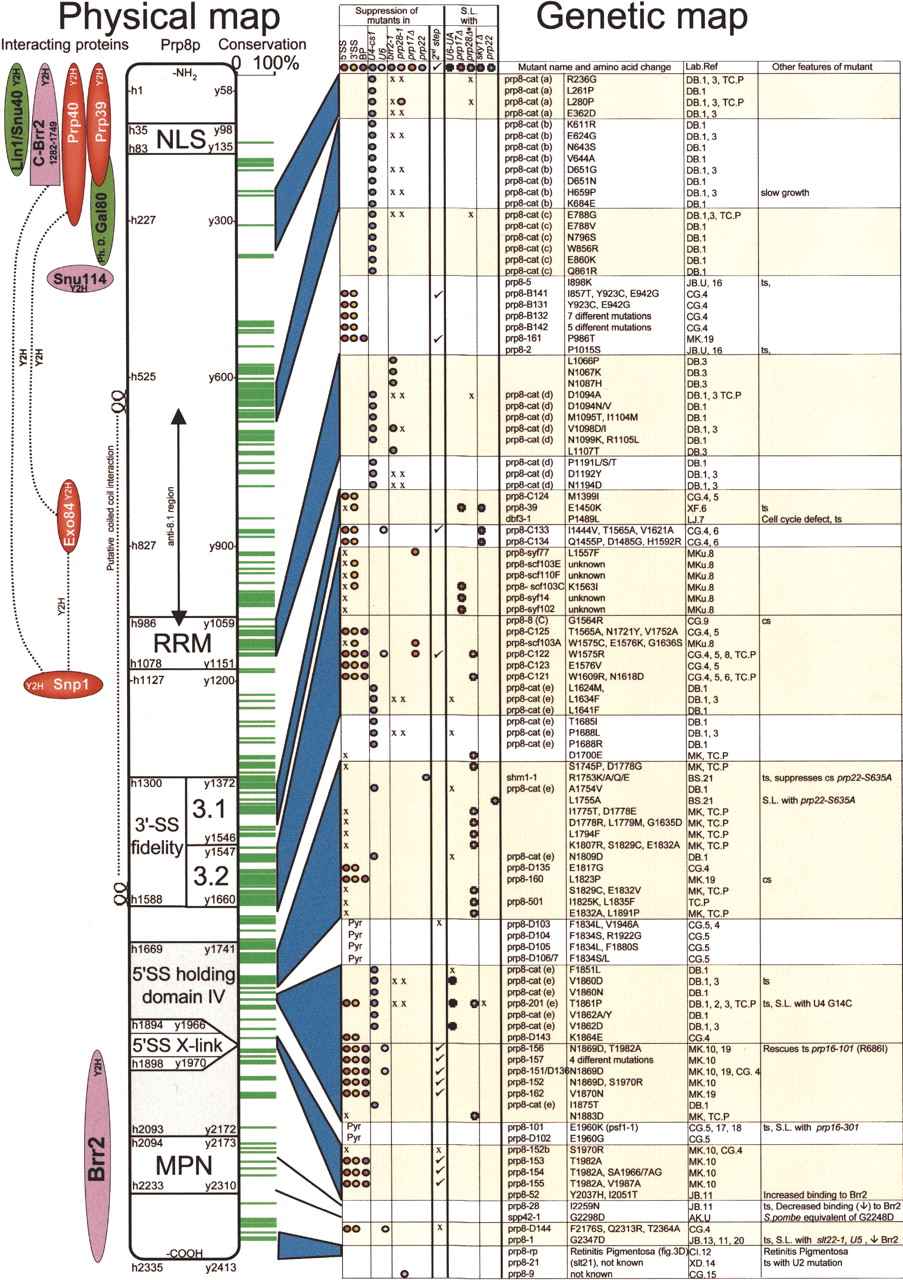
A stylized diagram of yPrp8 mapping the known motifs and yeast mutations. The numbers along the length of Prp8 represent the amino acid numbers for human and yeast. On the left are the yeast proteins known to interact with yPrp8 aligned approximately with the yPrp8 minimal region of interaction. (Y2H) yeast two hybrid; (Ph.D) phage display; (…) protein–protein interactions. Down the center of the stylized Prp8p are the motifs and domains discussed in the text. On the right a conservation bar code shows only residues that are 100% conserved between nineteen different species. The two plasmodium sequences were omitted because they contain excessive insertion sequences. The similarity line-up was performed with Vector NTI (Alignment; Invitrogen). In the table on the right are the allele names and their relevant genotype/amino acid alteration. A simple coloured dots scheme highlights their phenotypes. Alleles have then been aligned against the amino acid conservation map of Prp8 using blue trapezoids and yellow highlighting. (prp28Δ*) prp28Δ only in the presence of yhc-1; (S.L.) synthetic lethal; (Pyr) pyrimidine tract recognition mutation; (x) alleles tested and no phenotype noted; (ts) temperature sensitive; (cs) cold sensitive. The lab that first reported the mutations is indicated by the lab head’s initials; references numbers refer to a list posted on Jean Beggs’ Web site (http://www.ed.ac.uk/~jeanb/). P.I. initials and names are: (DB) D. Brow; (TC) T-C Chang; (JB) J. Beggs; (CG) C. Guthrie; (MK) M. Konarska; (MKu) Martin Kupiec; (XF) X. Fu; (LJ) L. Johnston; (BS) B. Schwer; (DX) D. Xu; and (CI) C. Inglehearn.




